Walking Tour
Smelter City Stories
Trail Through Time
Andrew Farris
Trail Museum & Archives No. 12952
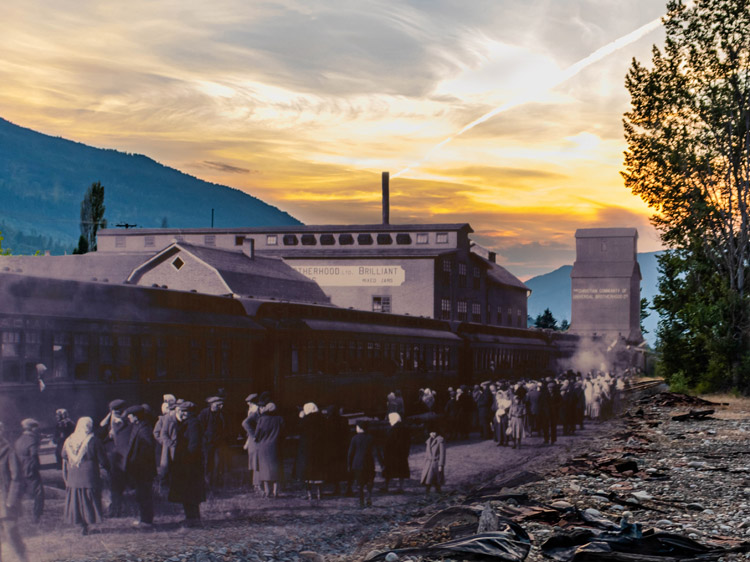
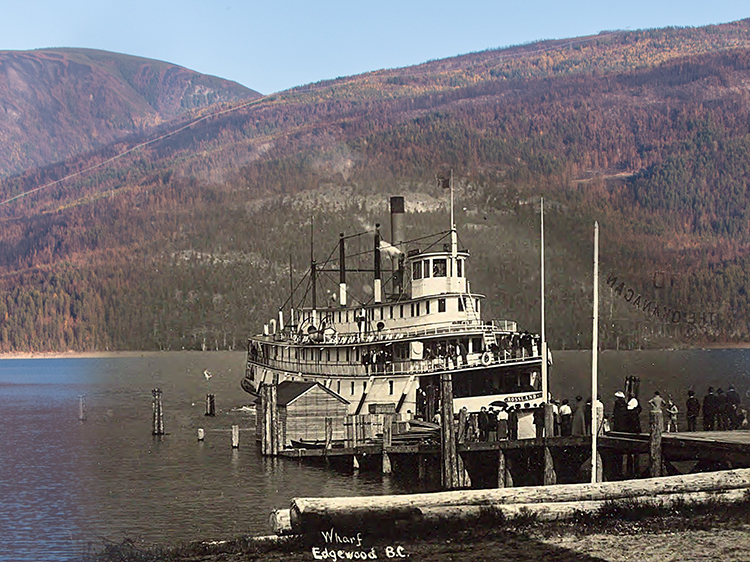
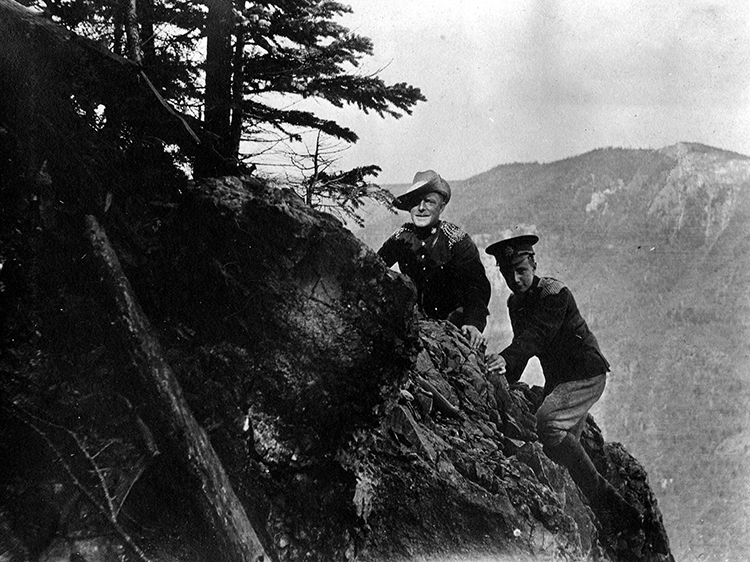
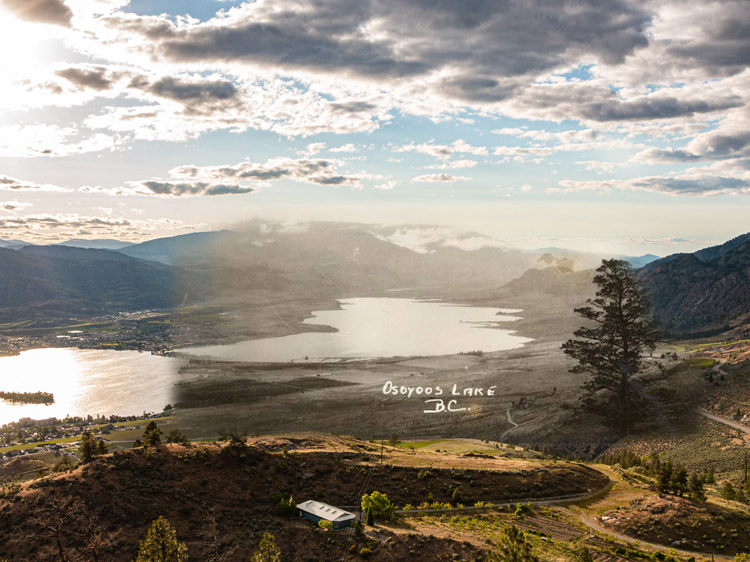
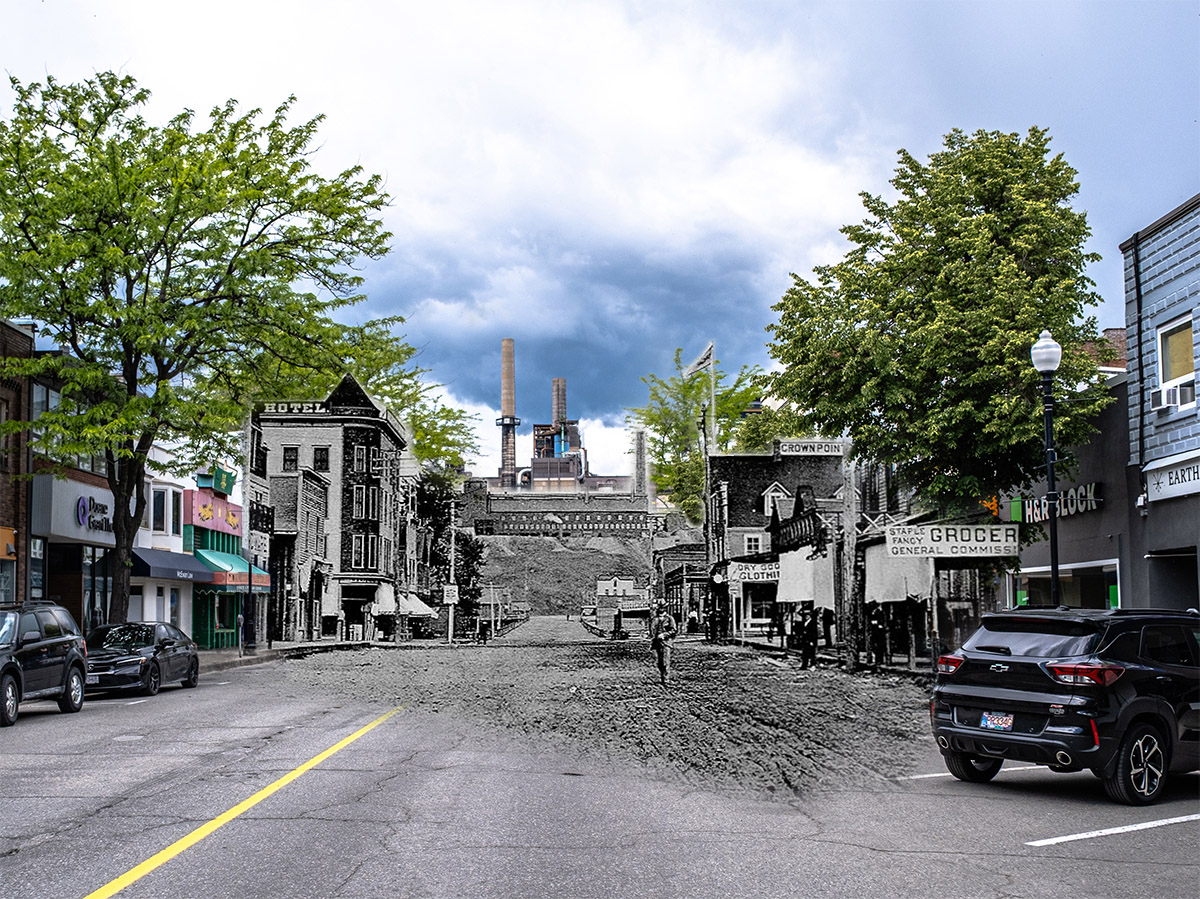
It's an exciting journey through Trail's past that traverses much of downtown Trail and should take around 90 minutes.


This project is a partnership with the City of Trail and the Trail Museum & Archives, part of the celebrations of Trail 125. We also thank the Columbia Basin Trust, Teck Trail Operations, and FortisBC for their generous support.




1. Arlington Hotel
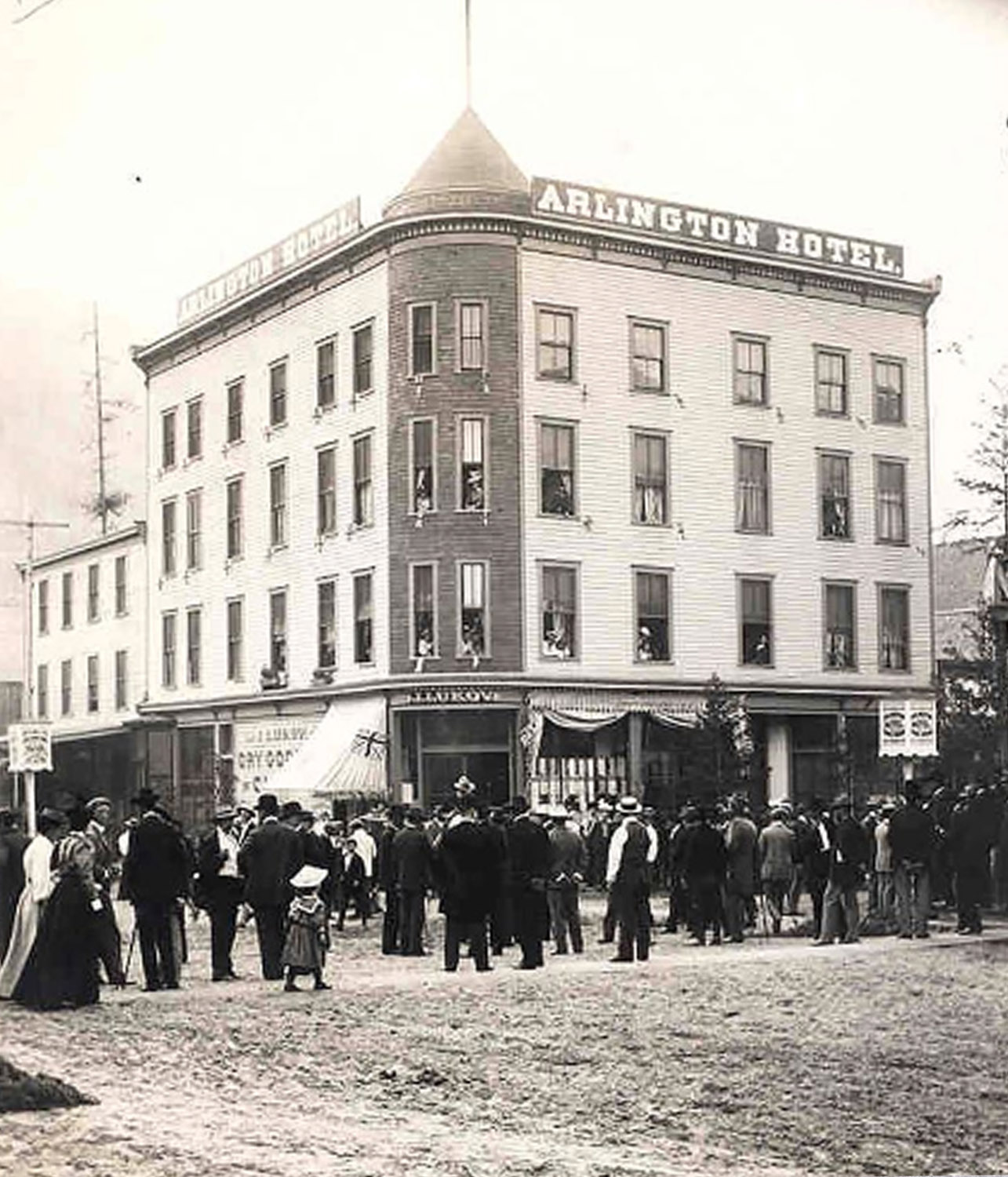
Trail Museum & Archives No. 73
In this wonderful photo a crowd gathers on the street in front of the Arlington Hotel, soon after it was built. Everyone appears to be lining the street waiting to see the Dominion Day parade. You can also see curious onlookers peering out of many of the hotel's windows.
The Arlington Hotel was built in 1896, the same year the smelter opened. At four storeys it was the new city's most prominent building. Richard T. Daniel, the Spokane mining magnate who built it, spared no expense. It had 45 richly furnished rooms, and the interior fittings alone are said to have cost $10,000, around $400,000 today. The Lieutenant-Governor of British Columbia called it the "finest hotel in the West."1
At the time it was built it was only one of eight hotels in Trail, and they were the main places where social life happened in the city. Only the Arlington Hotel, and the Crown Point across the street, have survived to the present.
* * *
Since the city was developing on either side of the mouth of Trail Creek, a proper bridge over the creek was an absolute necessity if Trail was to thrive. Unfortunately the government had no interest in putting up the money for the venture, so Topping and Daniel set to work raising the funds from the public. At high water in 1896 logs were floated up to the creek and piles driven into the muddy river-bed. When the bridge was completed the next spring, it was a momentous occasion for the community and became a place of civic gatherings: the scene of horse races and parades. The historian Ron Verzuh wrote that people took pride in the bridge because "Every plank, rail and spike was paid for out of the pockets of local citizens."3
Daniel soon left Trail and ended up in Tulsa, Oklahoma, where he oversaw the construction of an even larger and grander hotel there.
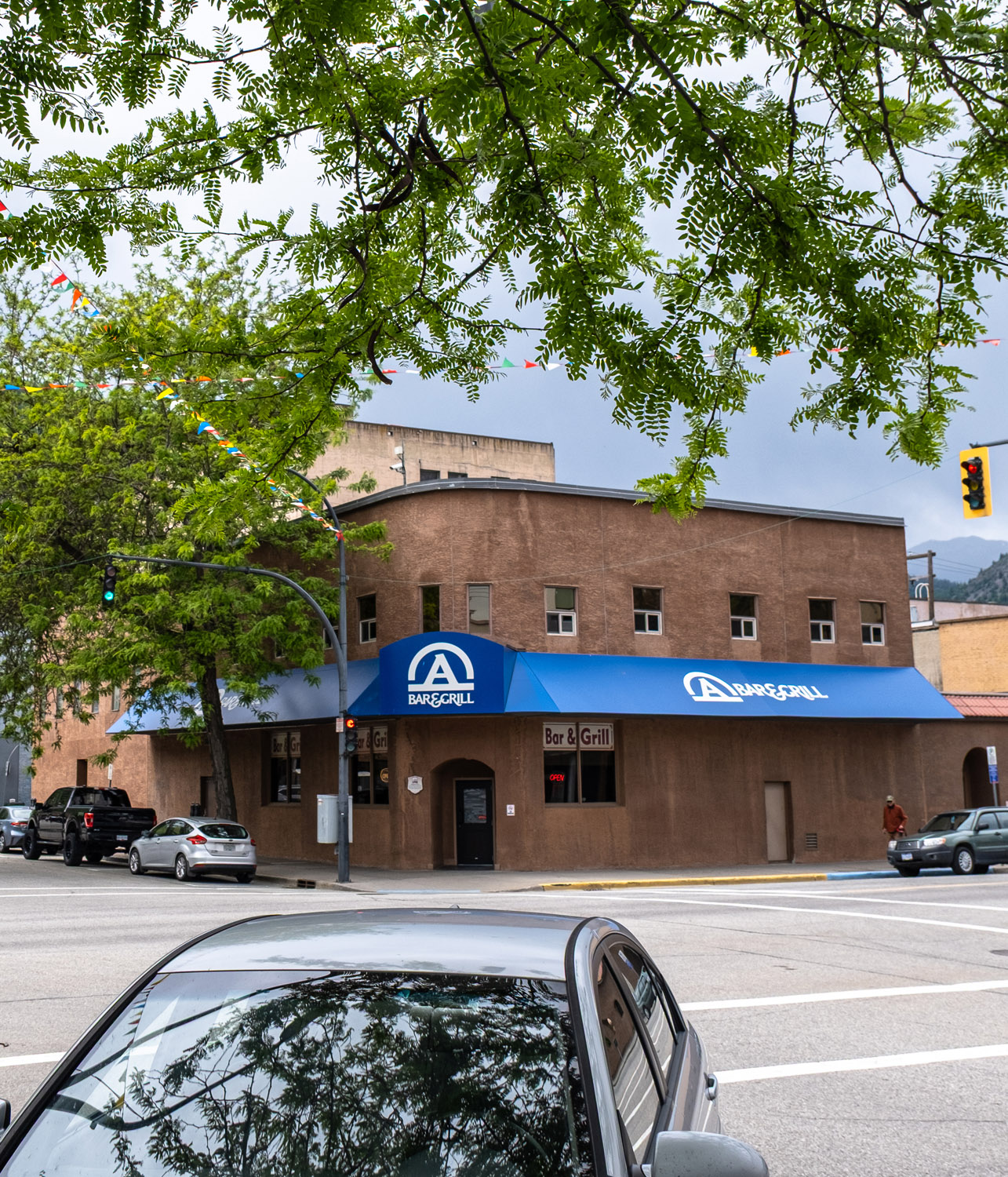
As for the Arlington Hotel, it has gone through many changes over the decades. In the 1920s the walls were stuccoed, and in the 1940s the conical tower was removed. Most obviously, as you can see it is now only two storeys instead of four. The top storeys were removed in 1987, the owner at the time saying that no heritage funding was available to preserve it. Today the upper floor has apartments while the bottom floor remains a beloved Trail restaurant and bar.
2. Crown Point Hotel
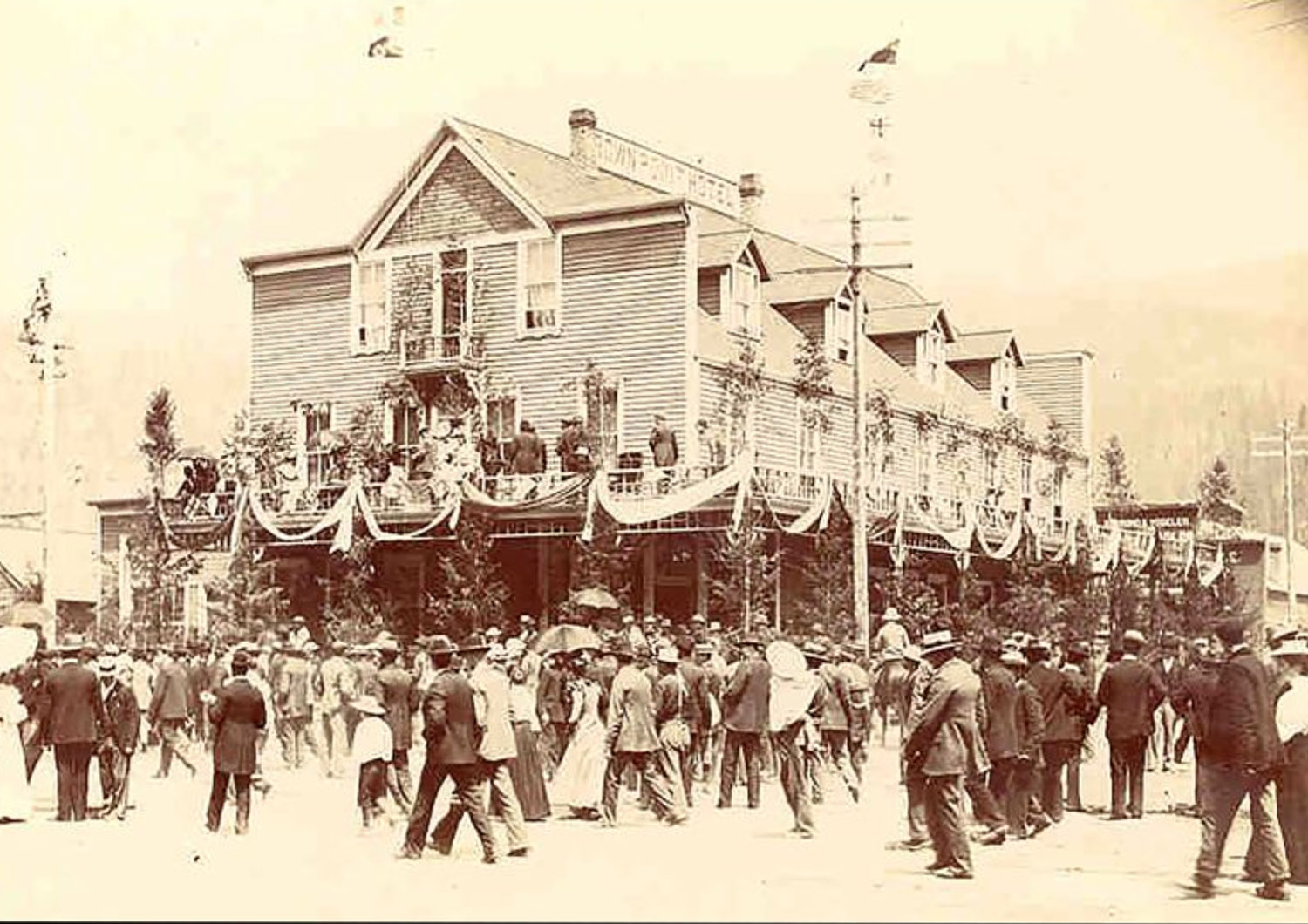
Trail Museum & Archives No. 1235
1898
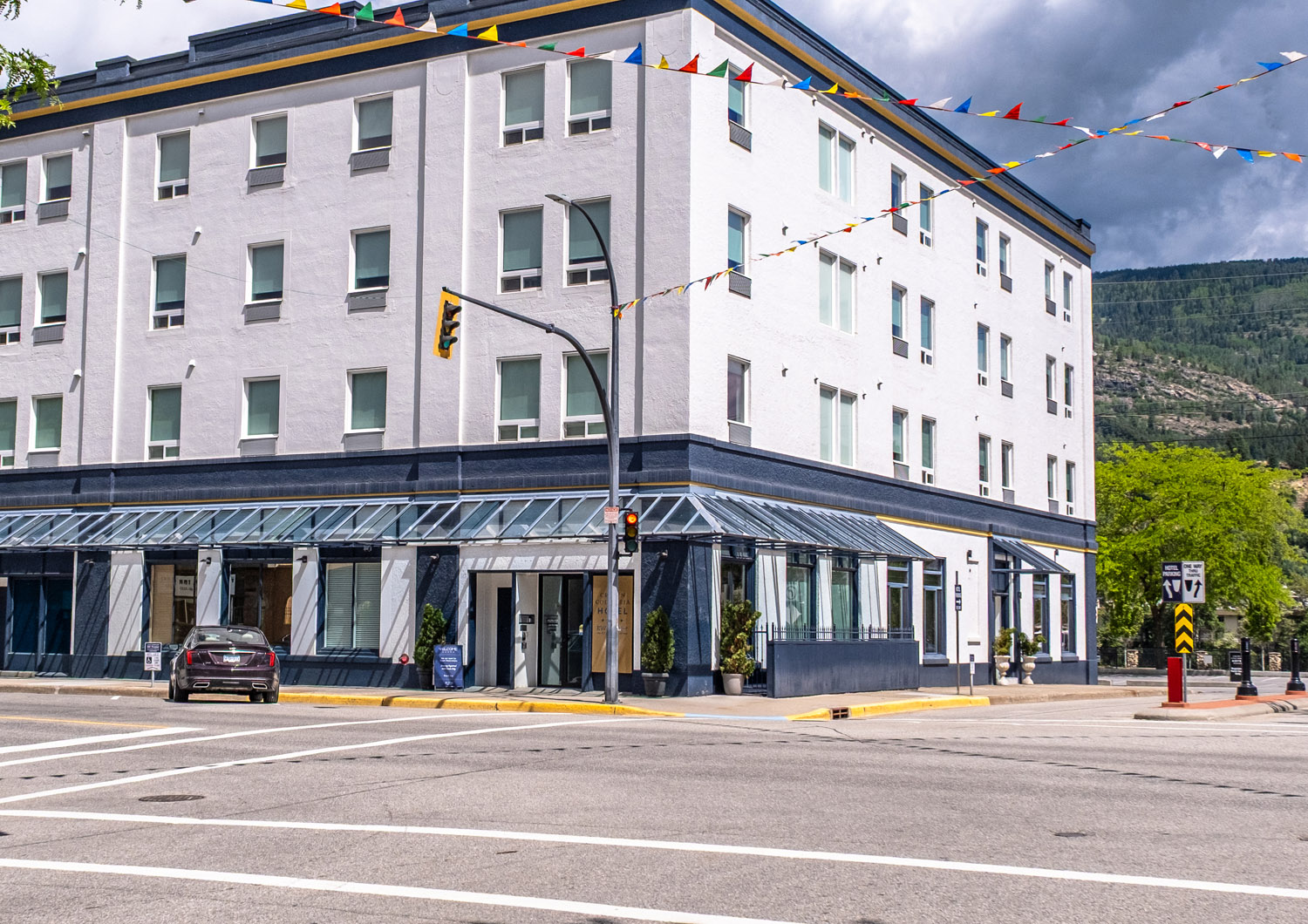
Here we see another Dominion Day celebration, this time showing the festively decorated Crown Point Hotel. The Crown Point was built right at the founding of Trail in 1895, and along with the Arlington Hotel, has overlooked the city's main intersection throughout its entire history.
* * *
When the hotel's owner Andy McDermott died in 1929, new owners from Alberta tore down the deteriorating wooden structure and erecting the bigger, concrete building you see today. With 60 rooms, the new Crown Point was the biggest hotel in town, and boasted steam heating and a grand rotunda.
Along with the Arlington Hotel across the street, the Crown Point is one of only two of Trail's original hotels still standing. In 2020, new owners gave it an extensive renovation and reopened it as the Crown Columbia Hotel.
3. Commerce Building
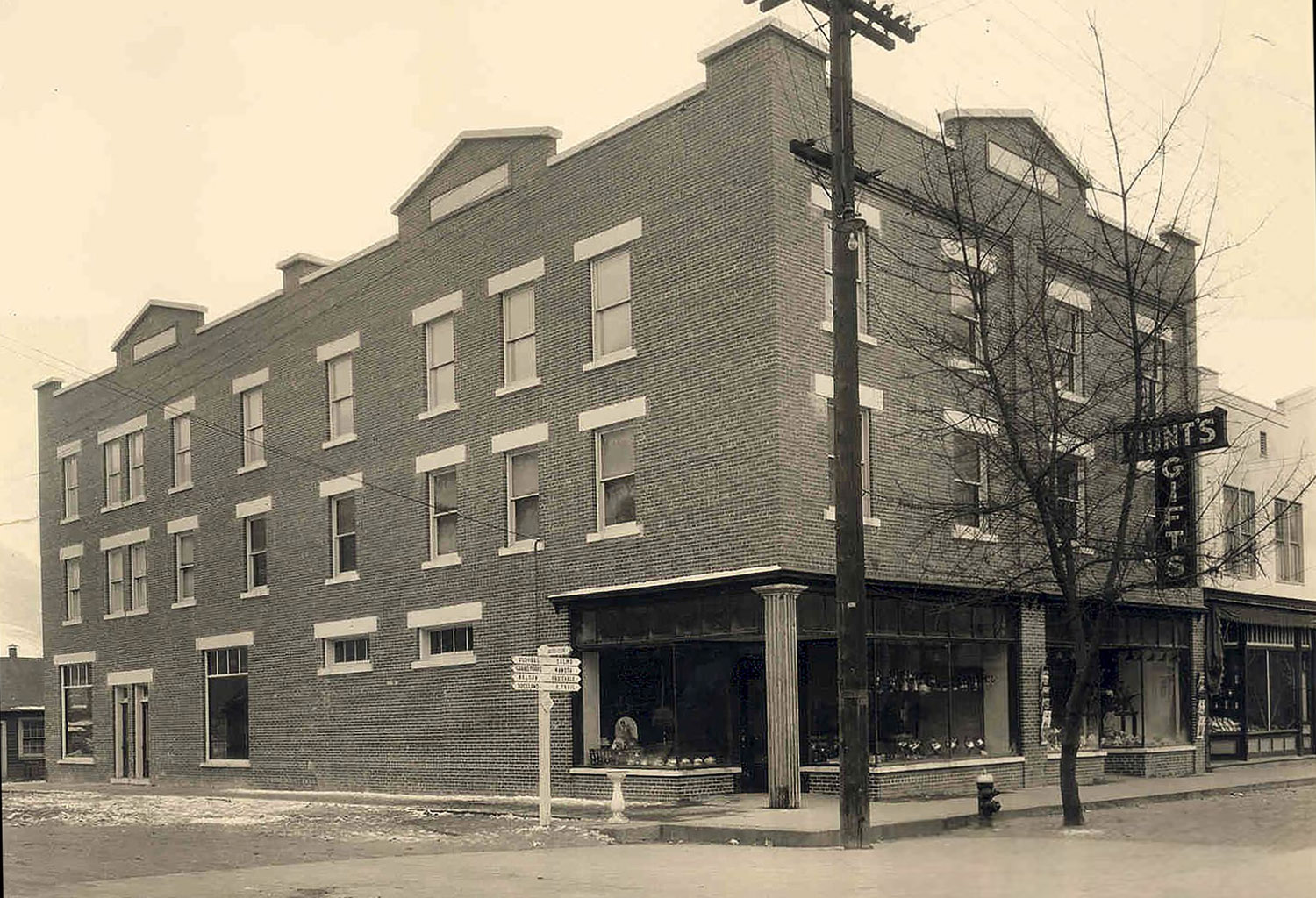
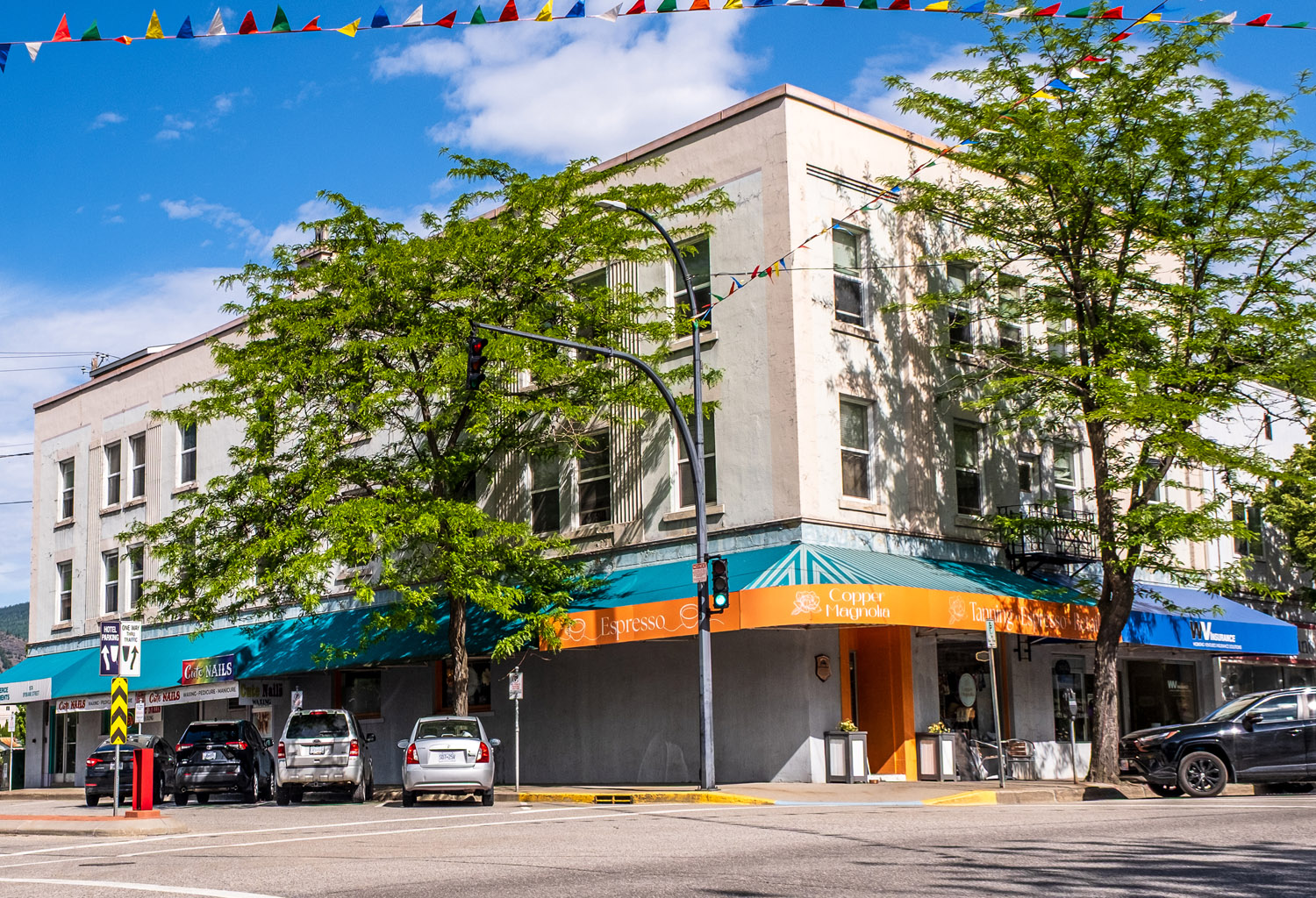
This business block was built in 1928 by W.K. Esling, the member of parliament for West Kootenays. It was built after a fire destroyed the Steele and Macdonald store that had previously occupied this prominent street corner.
It still looks brand new in this photo, and its first main tenant was the Hunt's Gift store. A few years later the Canadian Imperial Bank of Commerce moved its branch from the Arlington Hotel into this building. People started calling it the Commerce Building as a result, and the name has stuck to this day, even though the CIBC has moved elsewhere.
4. McLean-Butorac Motors
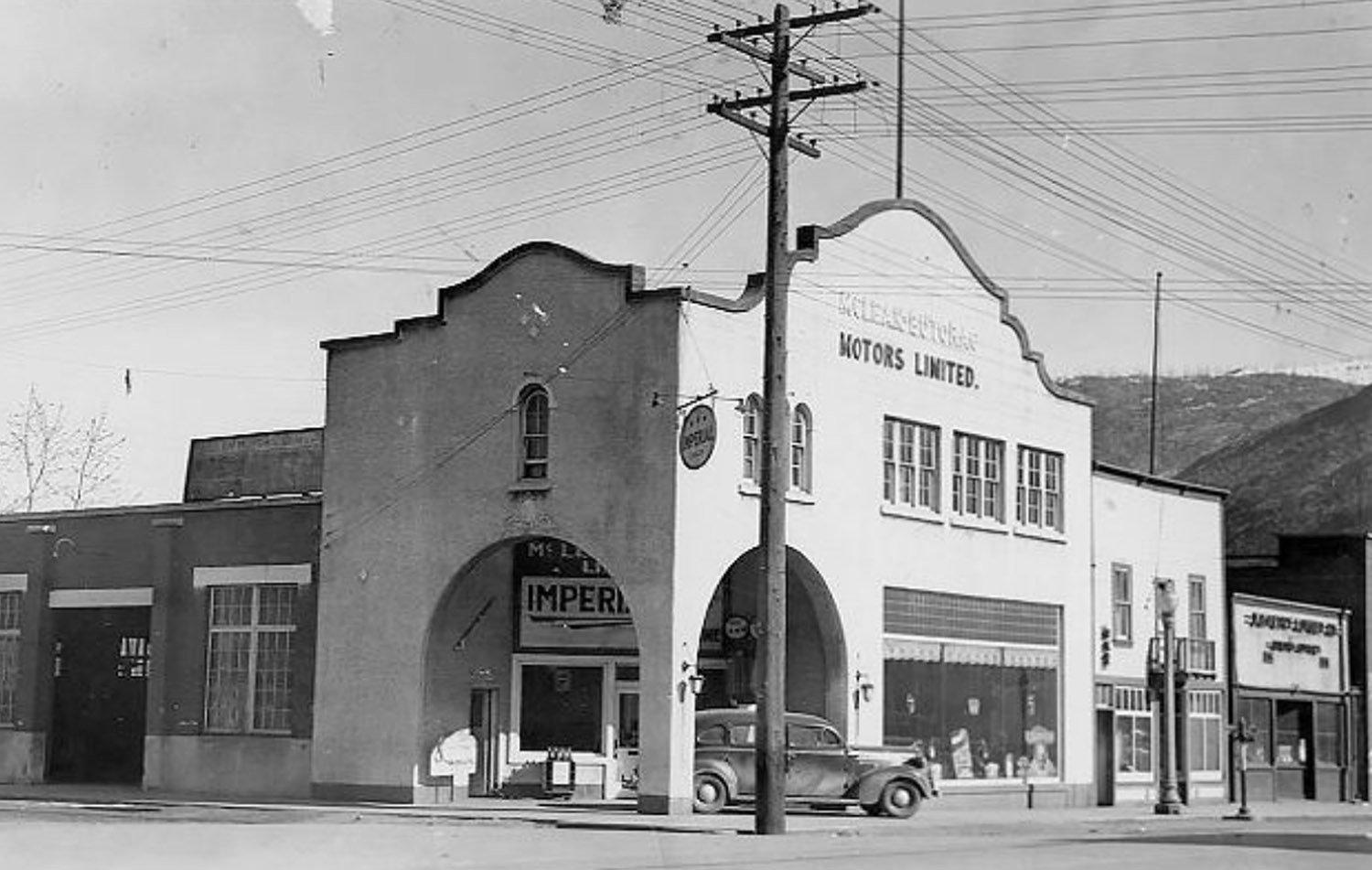
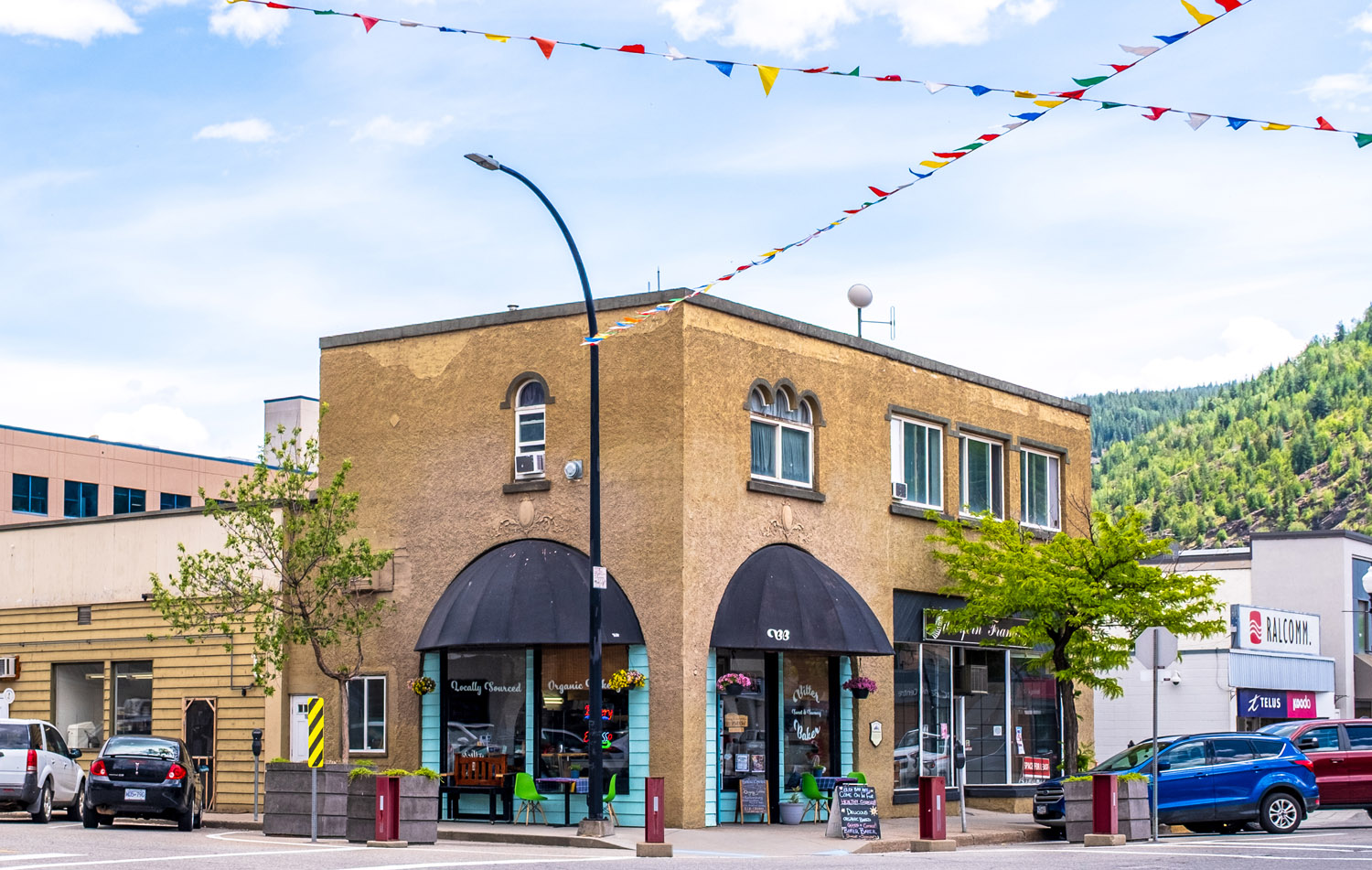
Harry McLean and Mike Butorac built this Art Deco garage in 1926 at the corner of Bay Avenue and Farwell Street, operating it as McLean-Butorac Motors, the local dealer for the Hudson Motor Car Company and its lower-priced companion brand, the Terraplane. The dealership was a major sponsor of local radio and backed a weekly program on CJAT that featured the "Terraplaners", a banjo and guitar duo.1
* * *
Moynes Motors and Transfer Ltd. took over the garage in 1947. The building's original Mission Revival-style roofline was flattened during renovations in the 60s to give it a more modern look. Happily the arched bays and windows survived the redesign.
It has since been home to a locksmith, barber, video rental store, sign shop, and taco shop. The Butorac family also operated a second dealership at Pine Avenue and Farwell Street. Built in 1943, the odd wedge-shaped structure was designed to fit alongside the railway line that once cut through town. Johnny's Enterprises bought that building in 1960 and it's been an automotive business ever since.
5. Strand Theatre
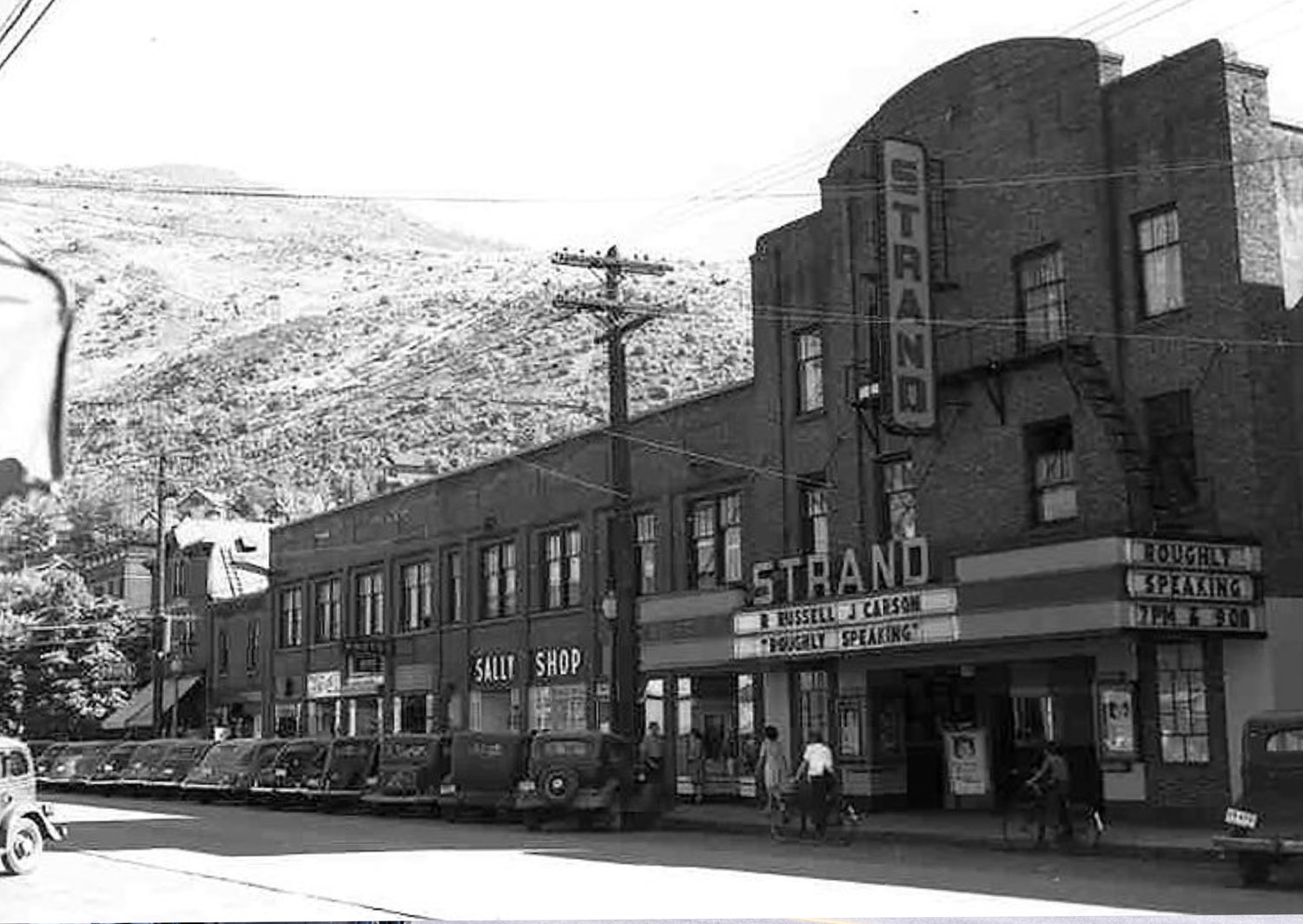
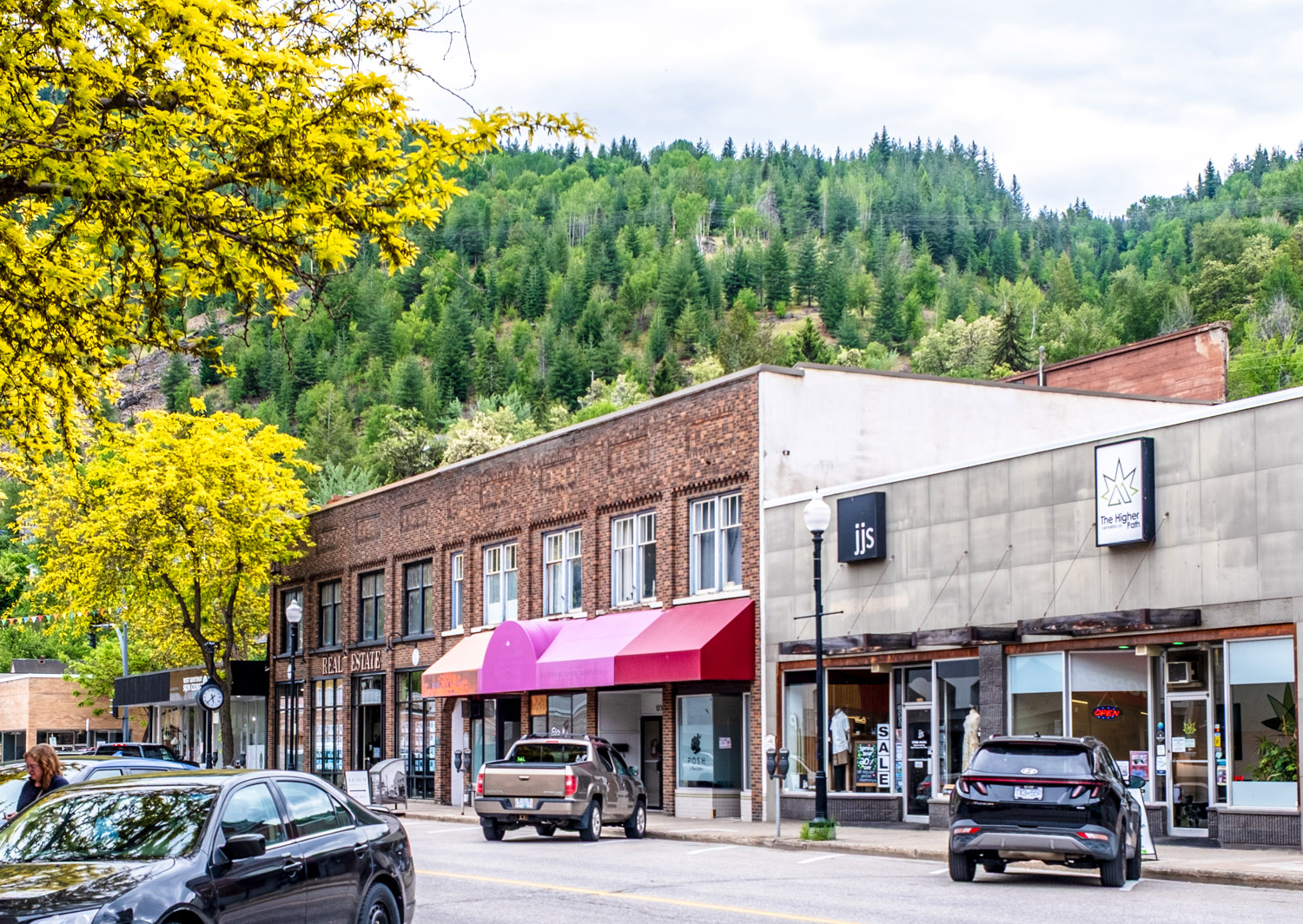
Once located on the south side of Cedar Street was the Strand Theatre. We can tell that this photo was taken in 1945 because the theatre is playing Roughly Speaking, which came out that year. It was a comedy about an American mom leading her family through the First World War and the Great Depression.
The Strand was built in 1917 for the Trail Opera House Company. It opened in the era of vaudeville and plays, but as those forms of entertainment gave way to movies in the 20s and 30s, the theatre was renovated many times to keep up with the times. "It became The Strand as we remember it in 1936 after the last bout of renovations," said Trail archivist Addison Oberg.
In its heyday it was described as "finest theatre in the Interior of British Columbia, and one of the finest in the entire Dominion."1
Unfortunately it burned down in 1956.
* * *
Culos recorded the account of Mario Modin, who remembered having to go with his mother for her monthly reports at the Strand.
>It was sheer stupidity for one to say that my mother was an enemy alien … We would go to the Strand Block building and line up in the hallway and then go up to the second floor office. There would be quite a buzz in the queue of those registering, among whom many were Italians known to my parents. I was only four or five at the time but I do recall that we didn’t speak Italian there … One would line up in front of this large desk on which a register was visible. Sign and you were done!
Culos wrote that “Many of those polled felt that being compelled to report each month to the [police] constituted an indignity and personal embarrassment. Other respondents regarded this dictum a travesty of justice and denial of a person’s basic rights.”2
6. Knights of Pythias Hall
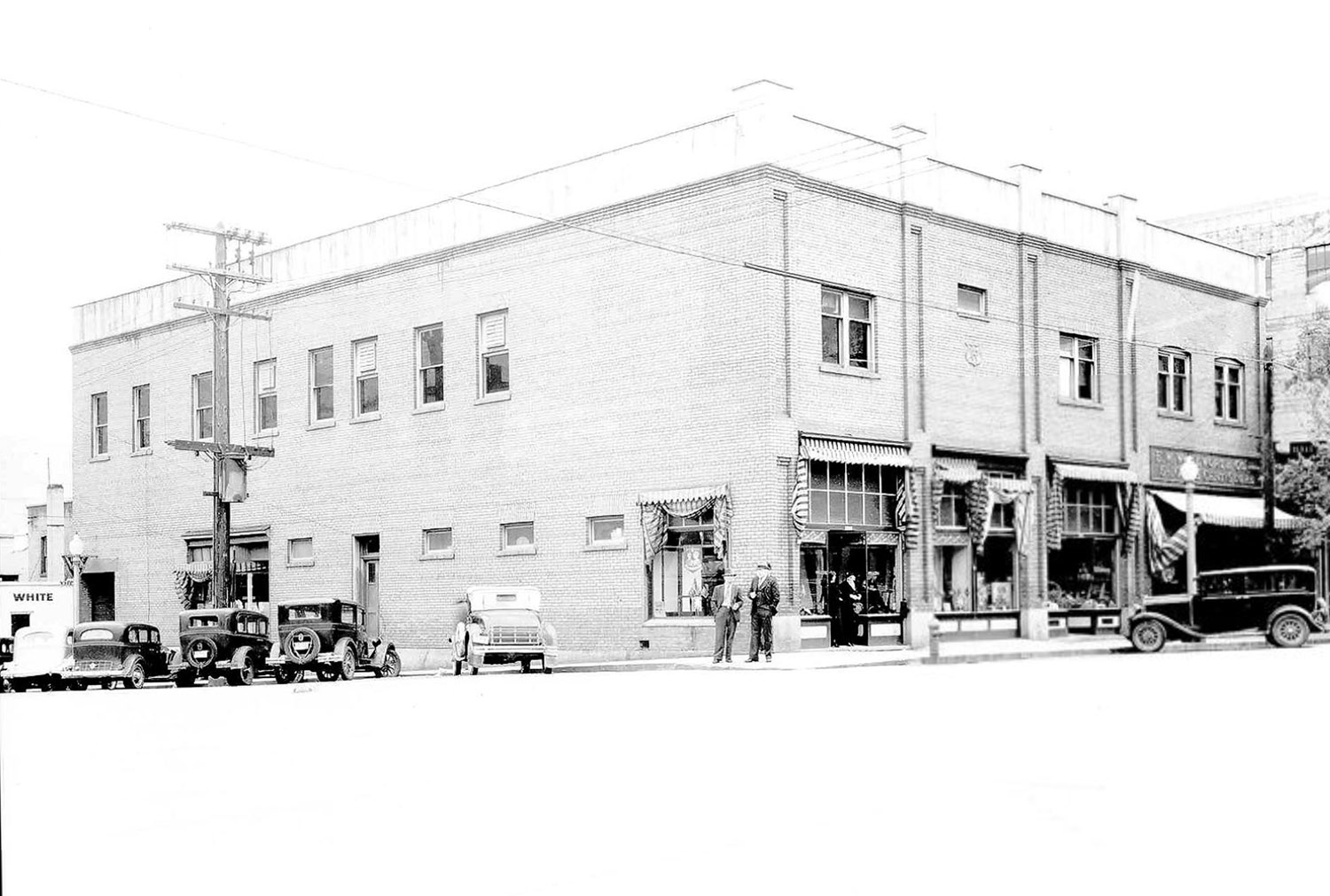
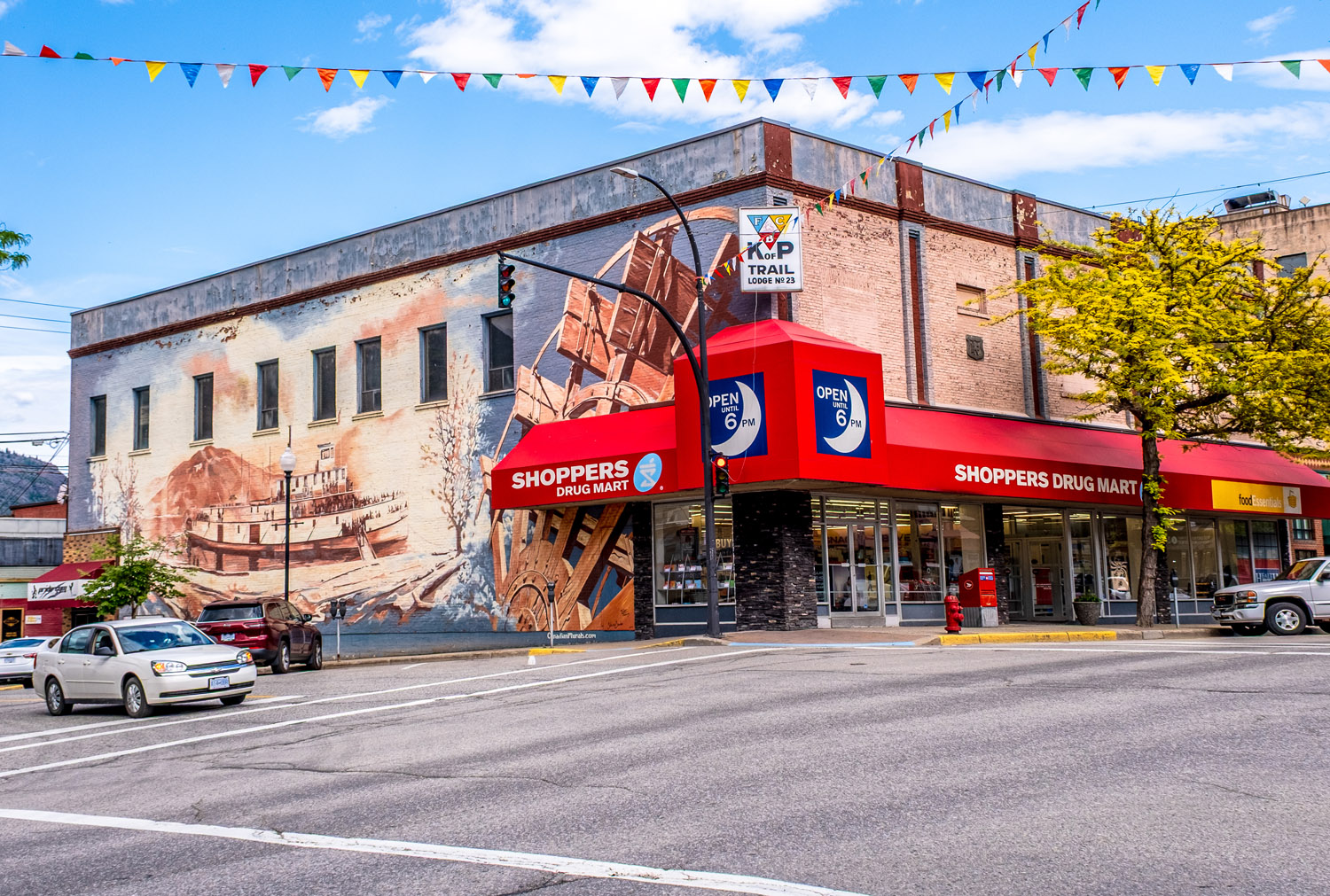
1930s
This is the Knights of Pythia building in the 1920s. At the time this photo was taken the knights would meet on the top floor, while the bottom floor was home to the F.W. Woodworth department store until the 1950s. Trail's CJAT, also first broadcast from a studio in this building in 1931 under the name 10AT.
* * *
The Trail chapter was founded in 1897 as Lodge No. 23. A number of benevolent societies were founded in early Trail along class and ethnic lines as people sought social activity and community support. Middle class professionals and merchants founded a Masonic Lodge, the Italian immigrants in the Gulch founded a Cristoforo Colombo Lodge, Croatian immigrants founded a Fraternal Lodge, and the Chinese and Jewish communities founded their own benevolent societies.1
7. Central School
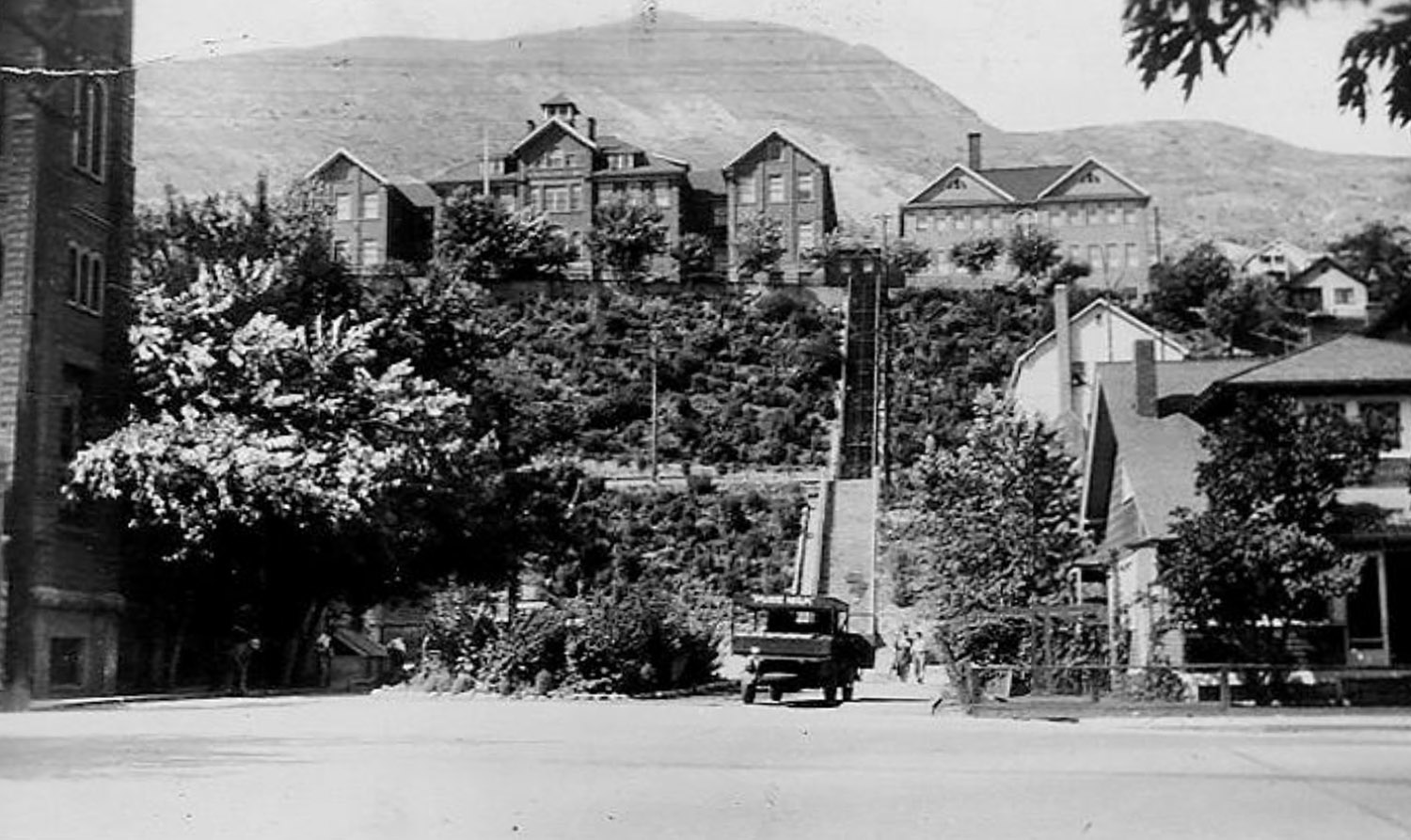
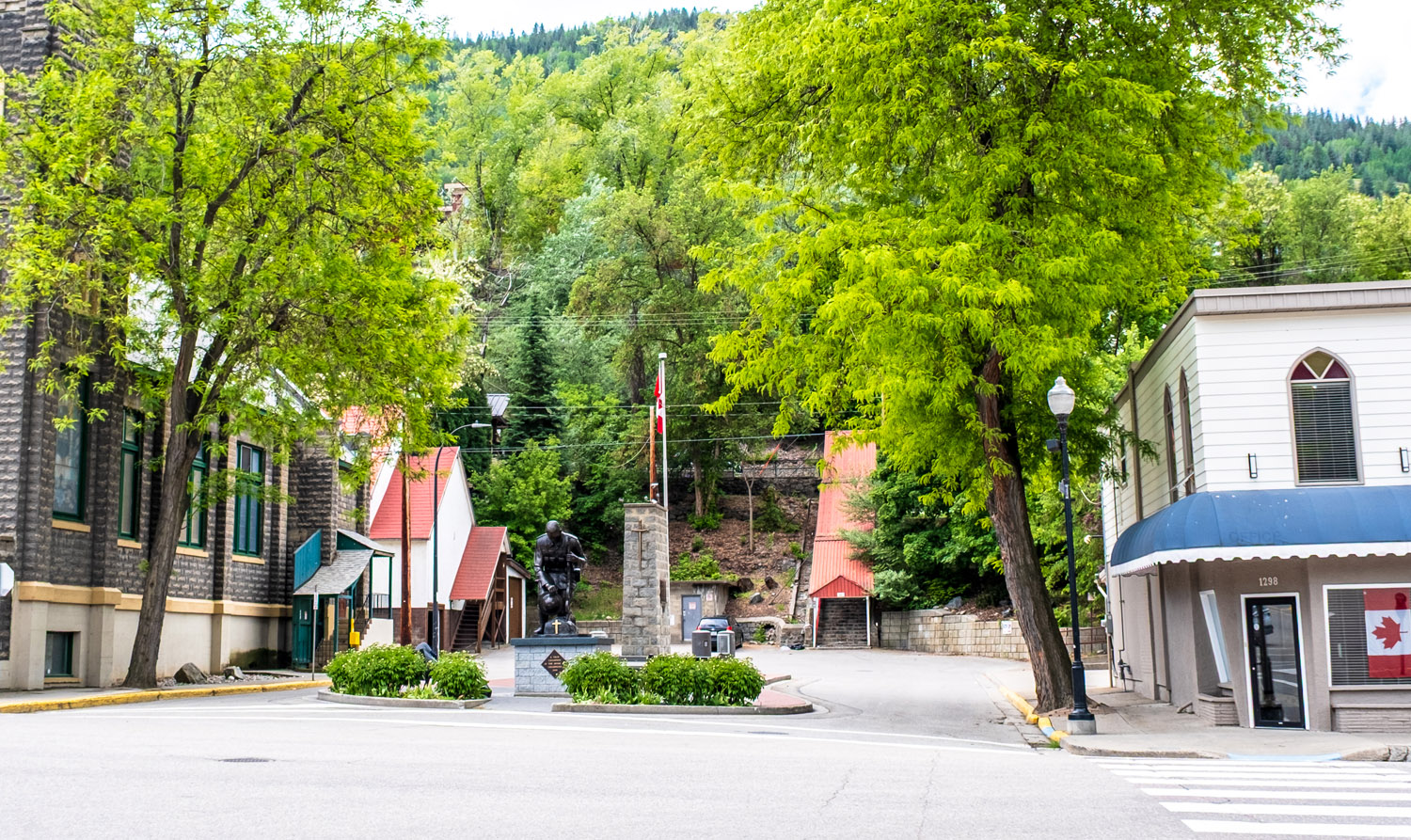
Sitting atop the bench is the Central School, Trail's first modern school. Of course Trail needed a school from the very beginning, and it didn't take long for the community to band together to build the first school on this spot in 1896. It was a rudimentary one-room schoolhouse that quickly burned down, but was quickly replaced by another somewhat larger schoolhouse. Not long after, in 1912, Trail's growing population and growing prosperity led to the construction of the impressive school you see today.
* * *
It wasn't the most luxurious building: in his book Smelter City, Ron Veruzh writes that the boards in the walls had knot holes so big the children could look through them, and the floors had gaps large enough to drop pencils through. But in 1896 there were 40 students attending classes.
Shortly after it was destroyed in a forest fire. This time the provincial government stepped in and paid for a new two room schoolhouse for now 100 students.
This served until 1911 when the Central School building you see today was built. As Trail grew so did the school, and new wings were added in 1916, 1918, 1930, and 1955. The school finally closed in 2000, and the classrooms were converted into apartments.
8. Knox Church
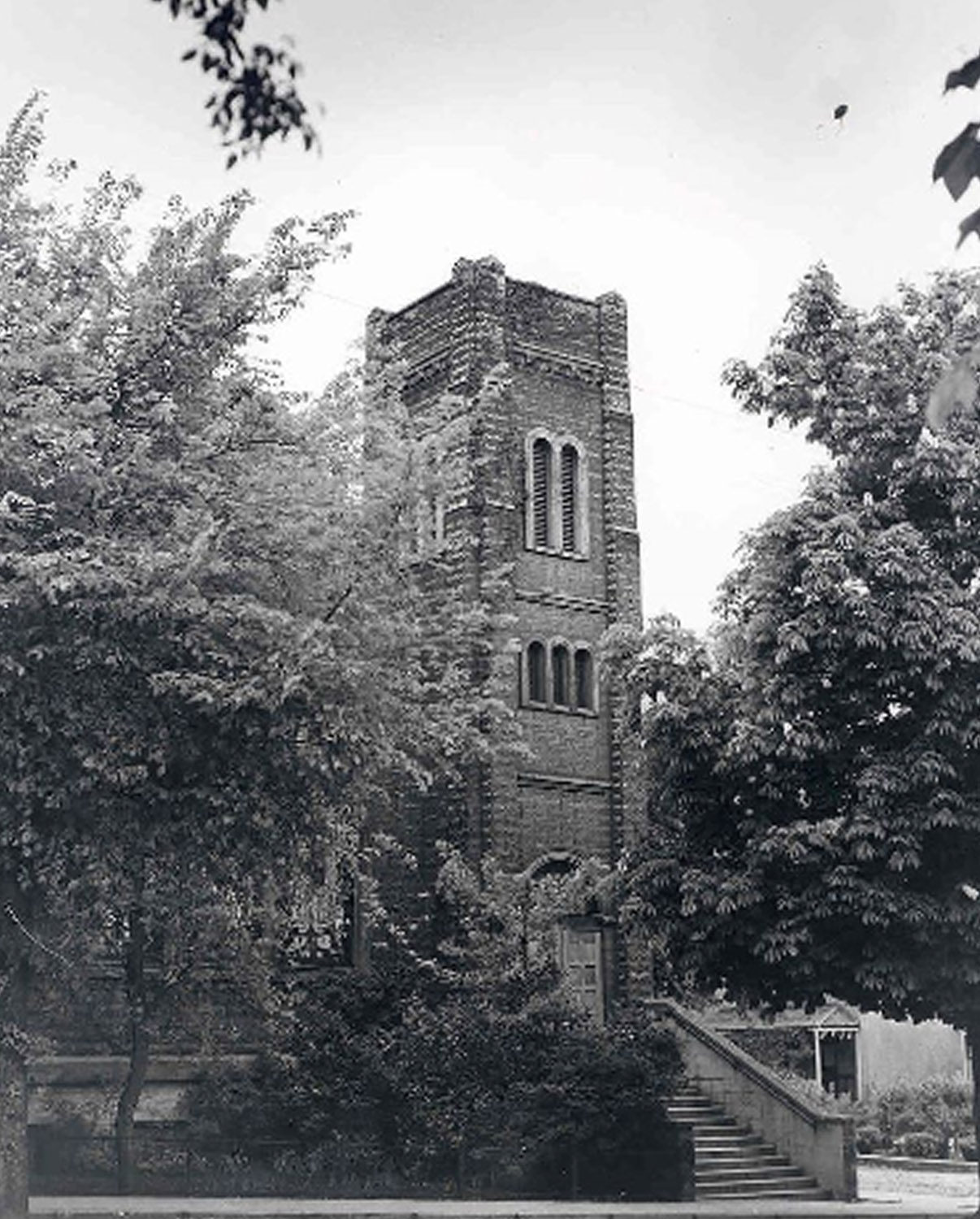
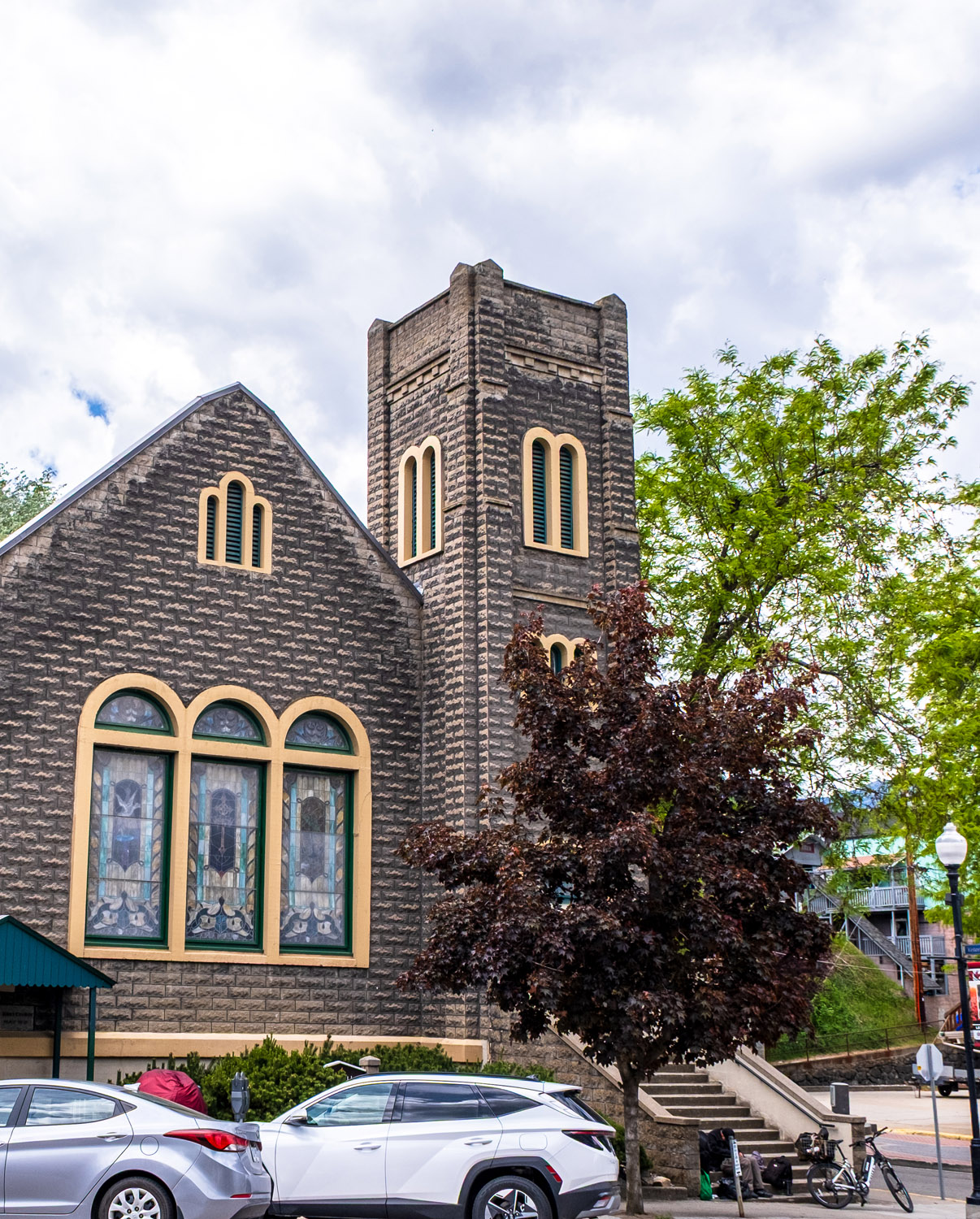
This is the Knox Church, which opened for worship to Trail's Presbyterians in December 1921. Four years later Trail's Presbyterian church merged with the Methodist and Congregationalist Churches to form the Knox United Church. This was part of a historic nationwide amalgamation of the three churches, so they could resources in small frontier communities and better coordinate their overseas missionary work.
Trail's United Church celebrated their 100th anniversary in September 2025.
* * *
In the early 1900s, as Trail's population grew rapidly, so too did the church congregations, and a larger and grander church was planned. After being delayed by the First World War, ground was broken for the Knox Church in 1920.
A pipe organ, chimes, and stained-glass windows depicting Hope, Victory, Peace, and Devotion were added to the church in the years that followed. A manse was built next door in 1936, and replaced in 1960 by a larger hall and multi-use facility.
Not just a house of worship, the church has been a community hub: it runs a food bank, and opens its doors as a warming and cooling centre during extreme weather, and hosts charity concerts and performances by the Kootenay Festival of the Arts.
9. City Hall & Fire Brigade
Trail Museum & Archives No. 1087
1929
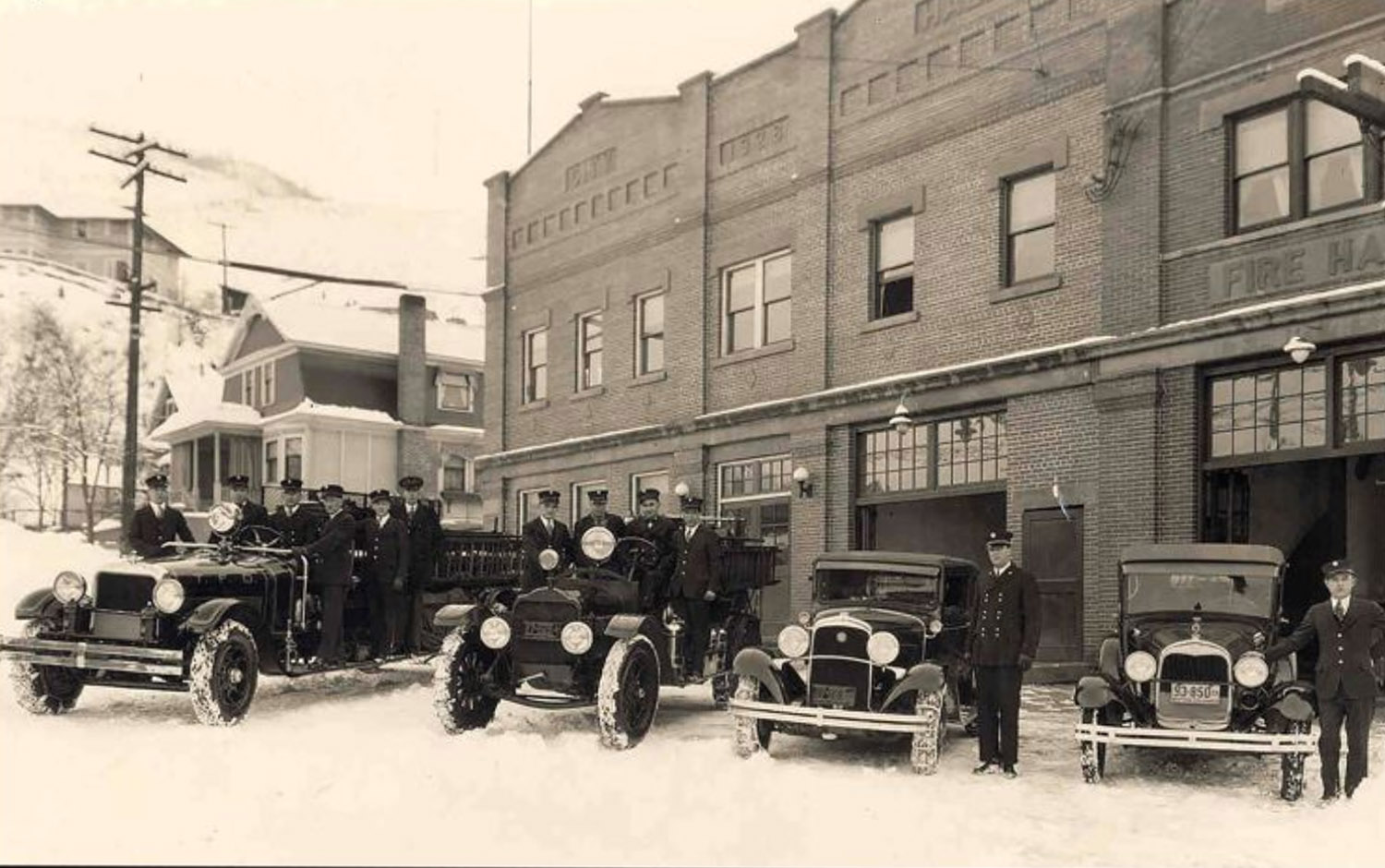
Here we see Trail's fire brigade and police departments posing with their fancy new fire trucks and police cars in front of Trail's city hall and fire station. This corner has been the heart of Trail's municipal governance for over a century.
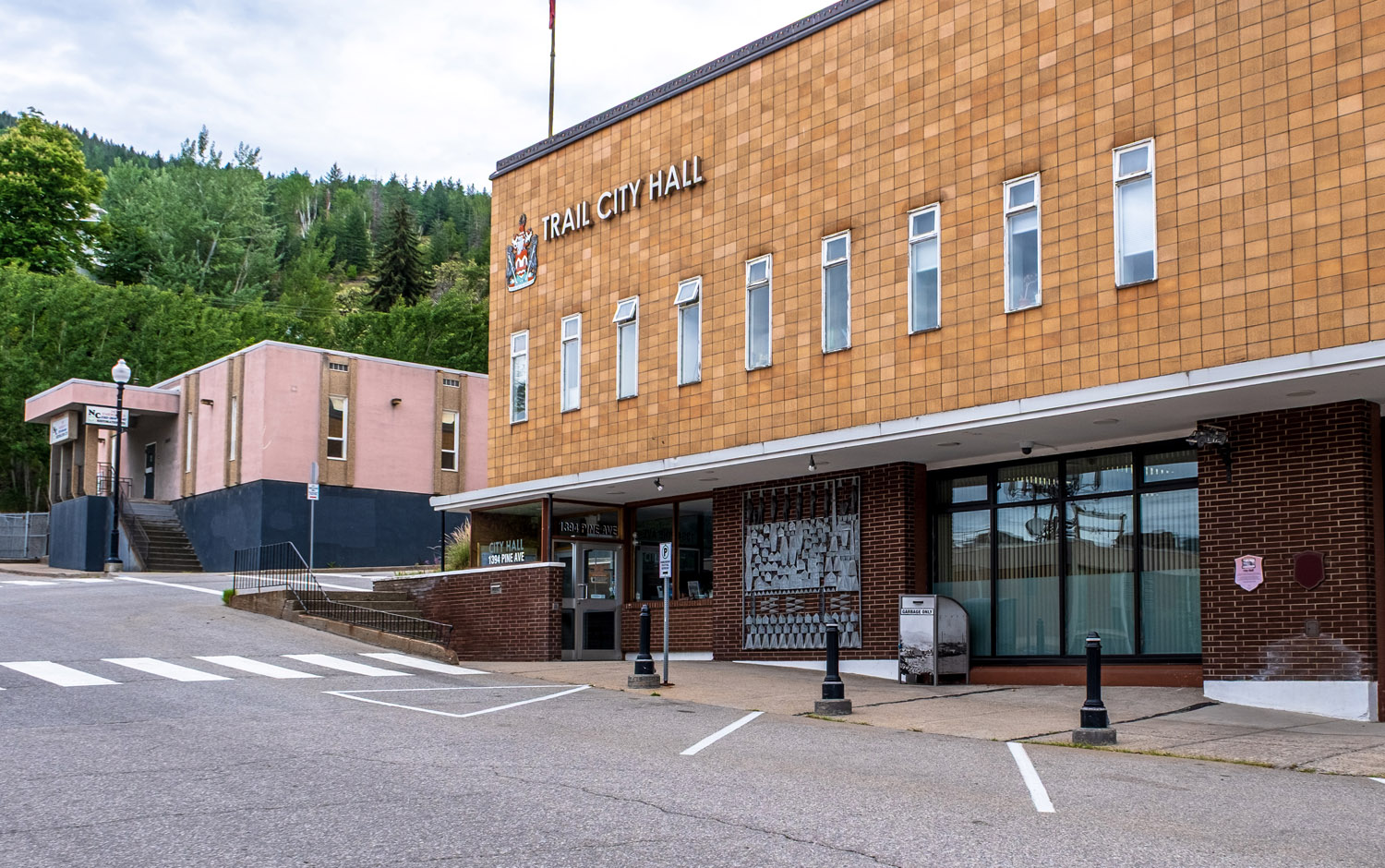
You might be surprised to learn that the building behind them in the 1929 photo is actually the same one you see here today. In 1961 it underwent a rather dramatic exterior remodeling, but it is still the same. The fire station has moved however. Today it is located at a big regional hall on Rossland Avenue, while the city hall expanded to take over the fire station part of this block.
* * *
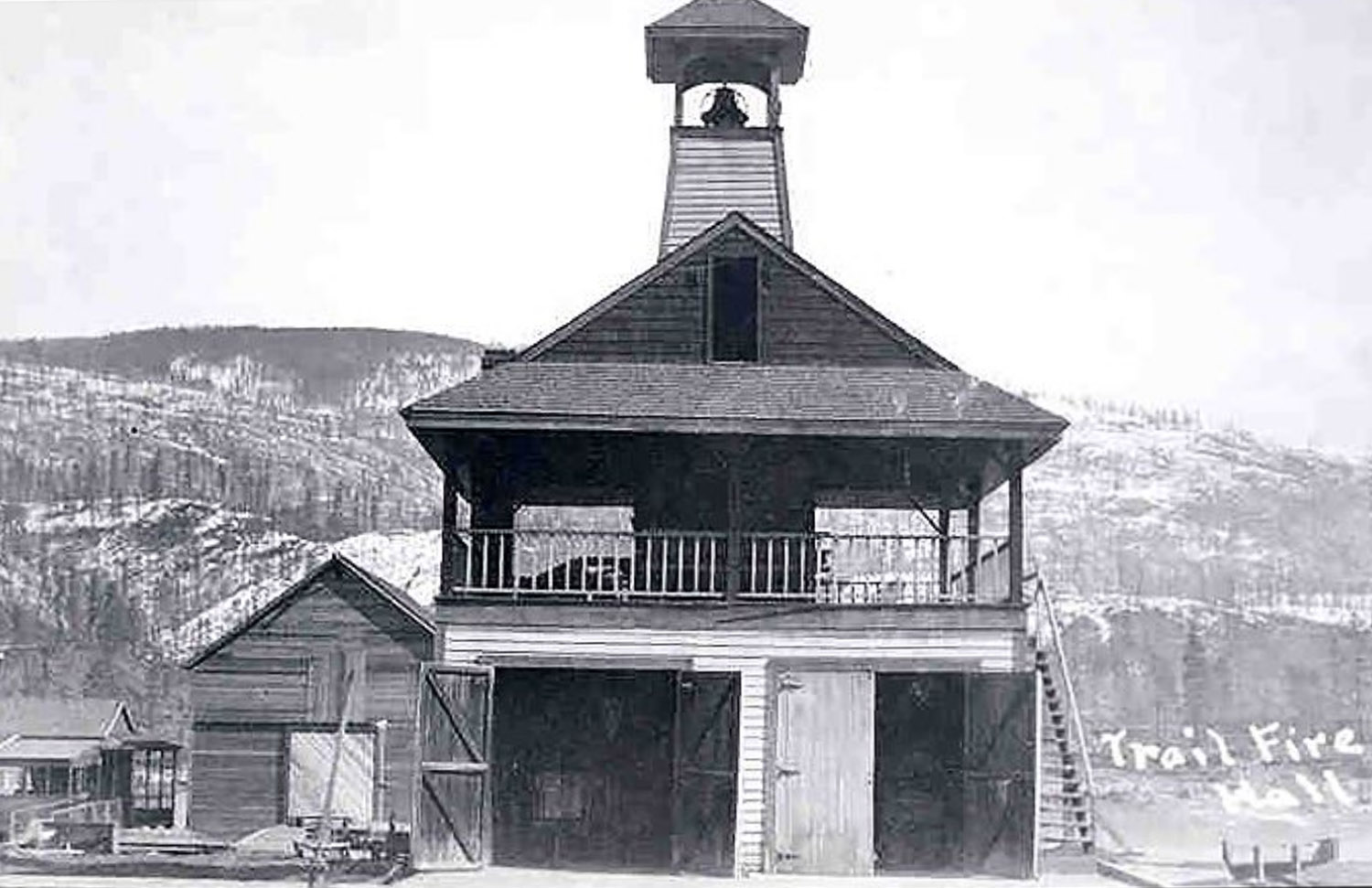
Trail's fire department also moved about in the city's early years, before settling on this spot. The volunteer fire brigade was first organized in 1895, with the community pitching in to buy a hose reel cart. After another round of community fundraising, a fire hall was built on Bay Street in 1898. It was laid atop piles driven into the creek bed. When the Trail Creek gully was later filled with slag, the hall was moved across the street.
By 1923, Trail's fire department was badly in need of a new fire hall that could house motorized fire engines and modern firefighting equipment. It was only natural to put it here, beside the city hall. The next year the department bought its first fire truck. By 1929, when this photo was taken, the fire department had two fire trucks, two full-time employees, and 18 volunteers.
Trail's fire department has a sterling record: In over 130 years Trail has never had a massive fire that destroyed a large section of the city. Today these are rare, and it might not sound like a very impressive boast, but 100 years ago fires that destroyed large parts of Canadian towns and cities were quite normal, if regrettable. So, as far as Canadian towns go, it is quite unusual that a large part of Trail has never burned down, and we can thank the fire department for that.1
10. Eatons Department Store
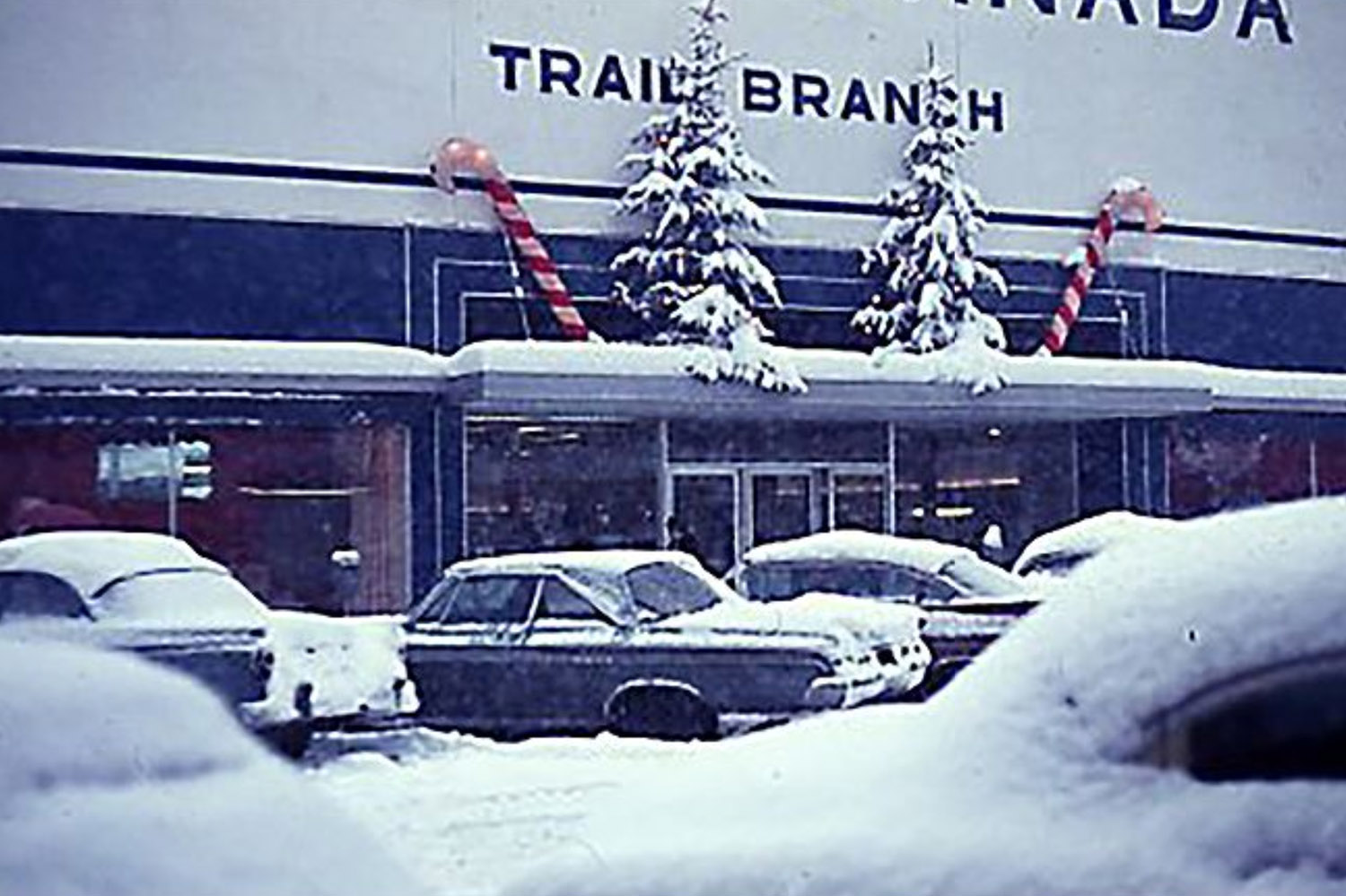
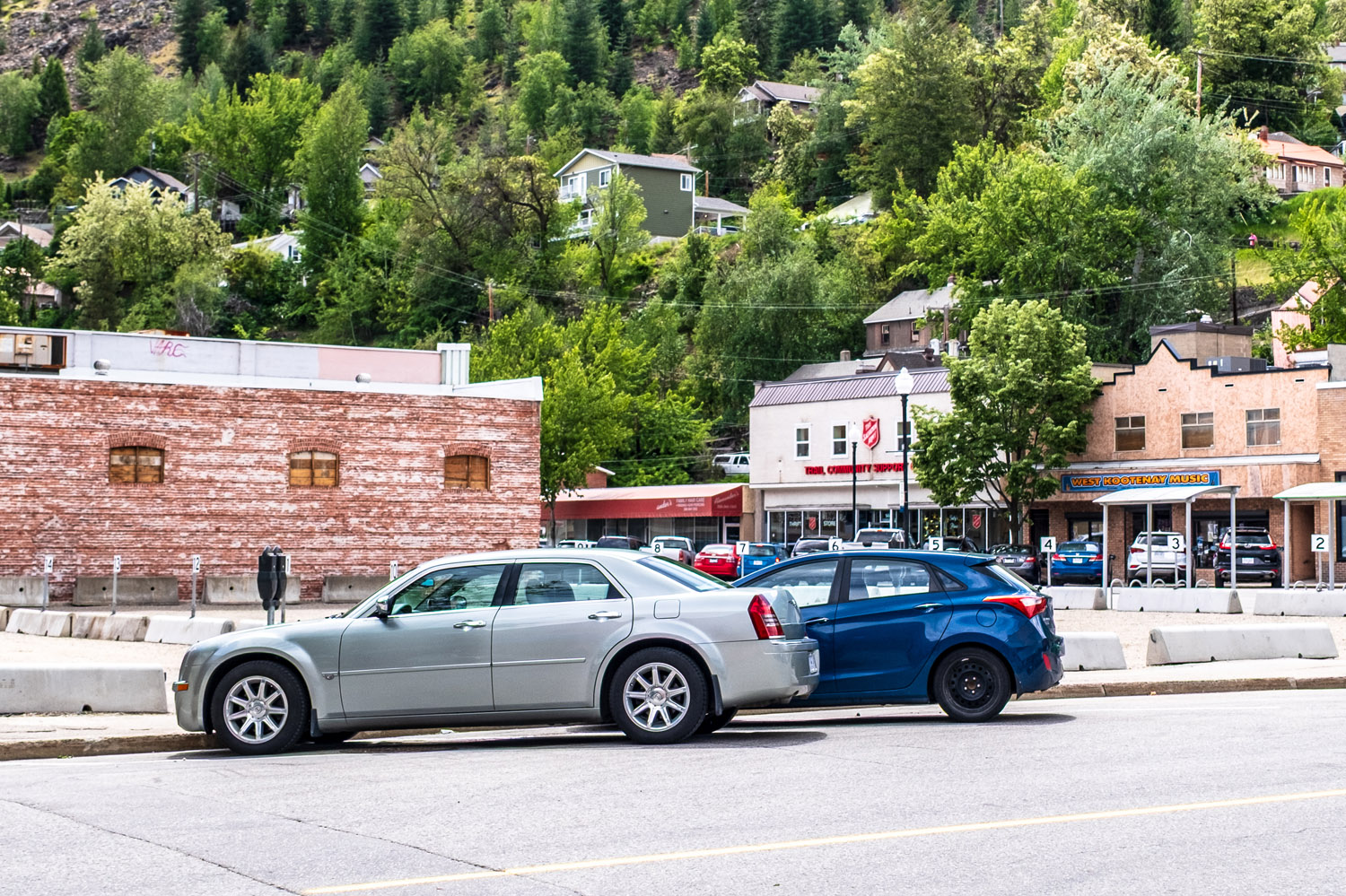
As we can see, this lot was once home to an Eaton's Department Store. This has been where people in Trail have gone to shop for much of the city's history, though the store has changed names a number of times.
* * *
In 2024 the lot was given to the City of Trail as a donation, and in 2025 the building was torn down. Currently it is an empty lot.
11. Trail High School
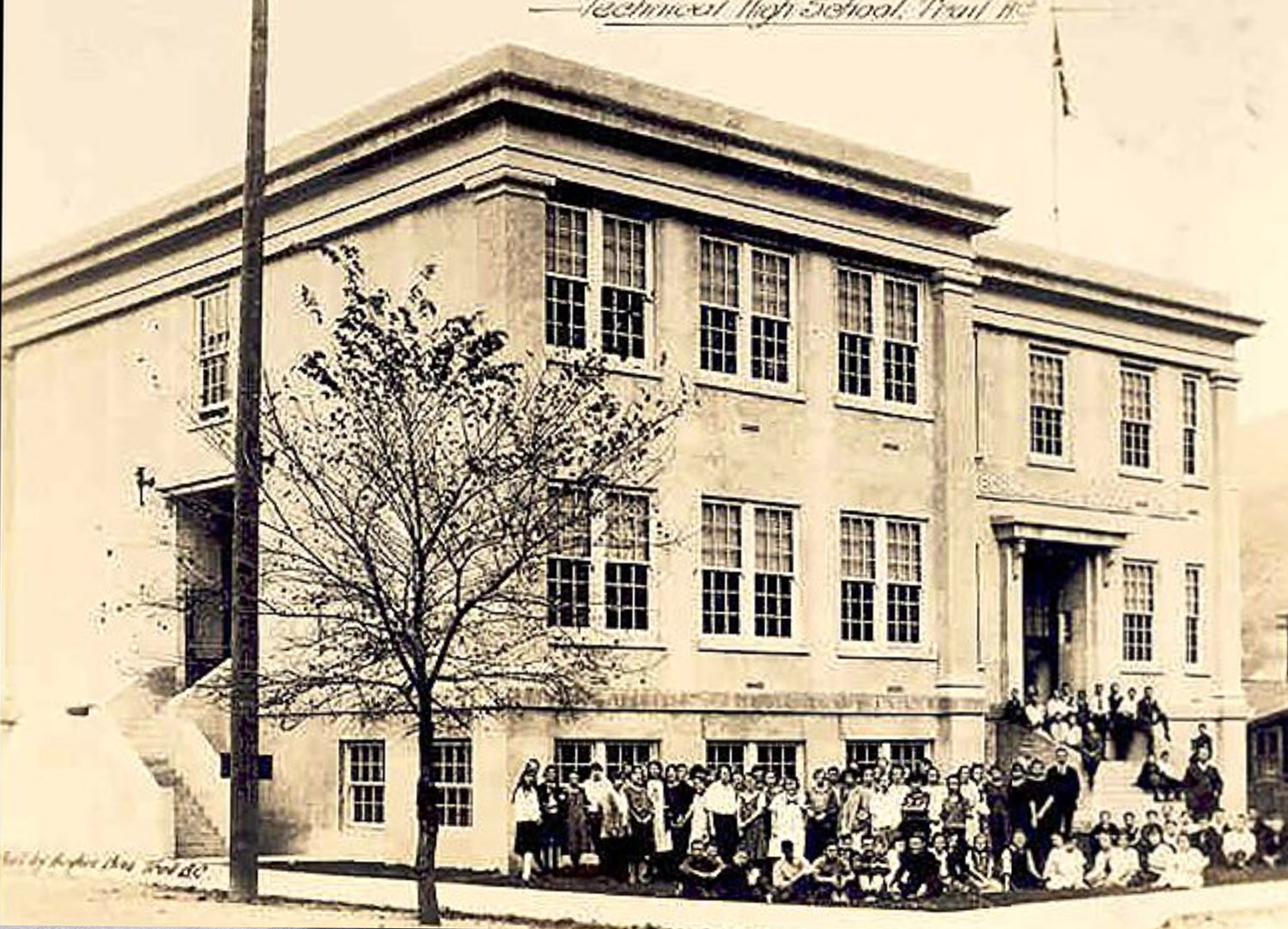
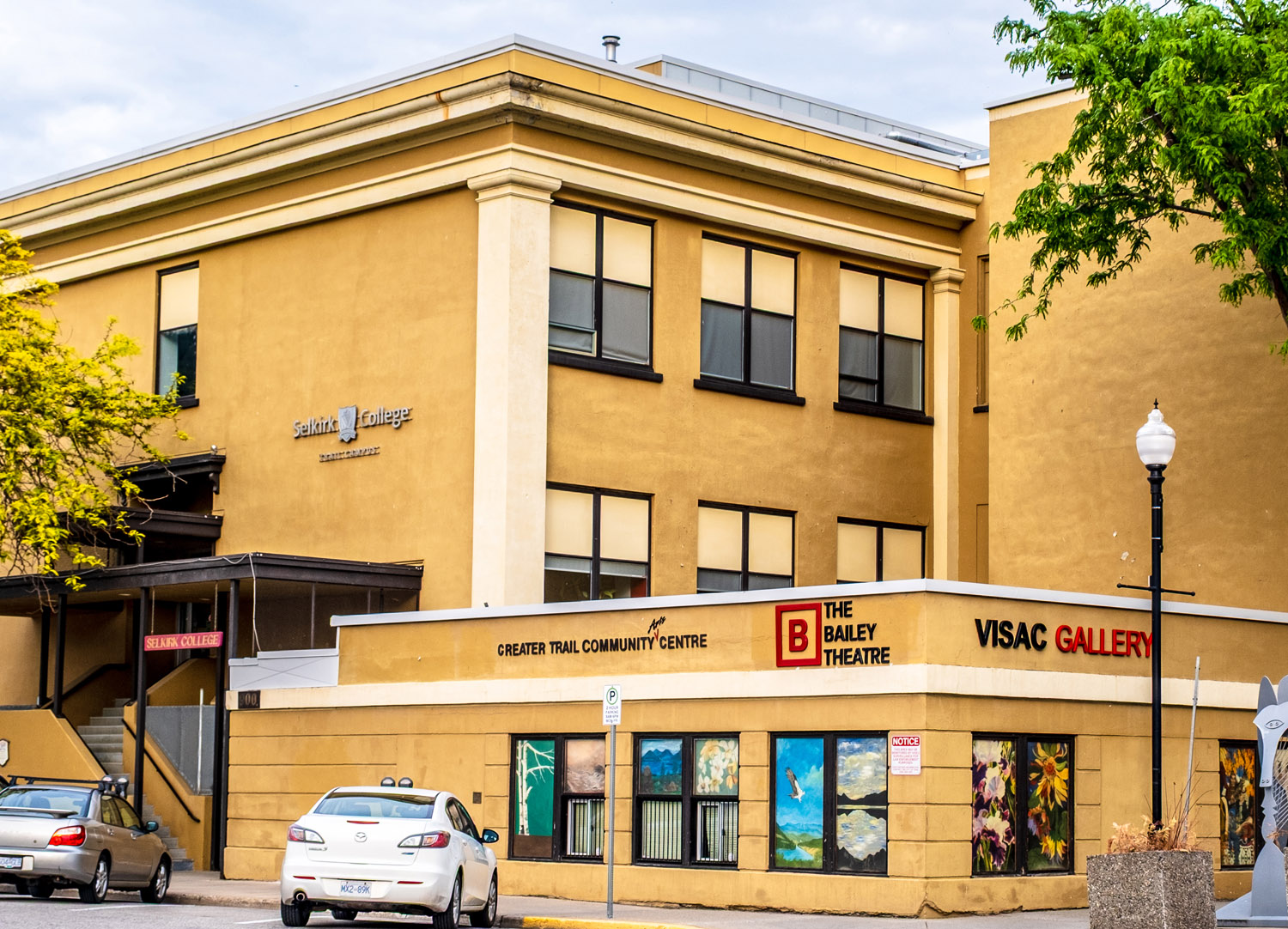
Kids pose for a class photo outside Trail's then-new Technical School. It was built in 1923 to offer grades 9 to 11, while opening up space at the Central School, which was becoming overcrowded. In the first year they had 90 students, which is about the number of students you can see in this photo. They began offering grade 12 in 1926.
* * *
There have been so many that they've largely engulfed the original building, as you can see.
In the 1950s it became a junior high school, and then in the 1980s, a community centre. In 2022 the entire building was transferred over to Selkirk College, the primary post-secondary institution in this city. Throughout the whole period new annexes and additions have been added on, so that they've largely engulfed the original building.
12. Trail's First Hospital
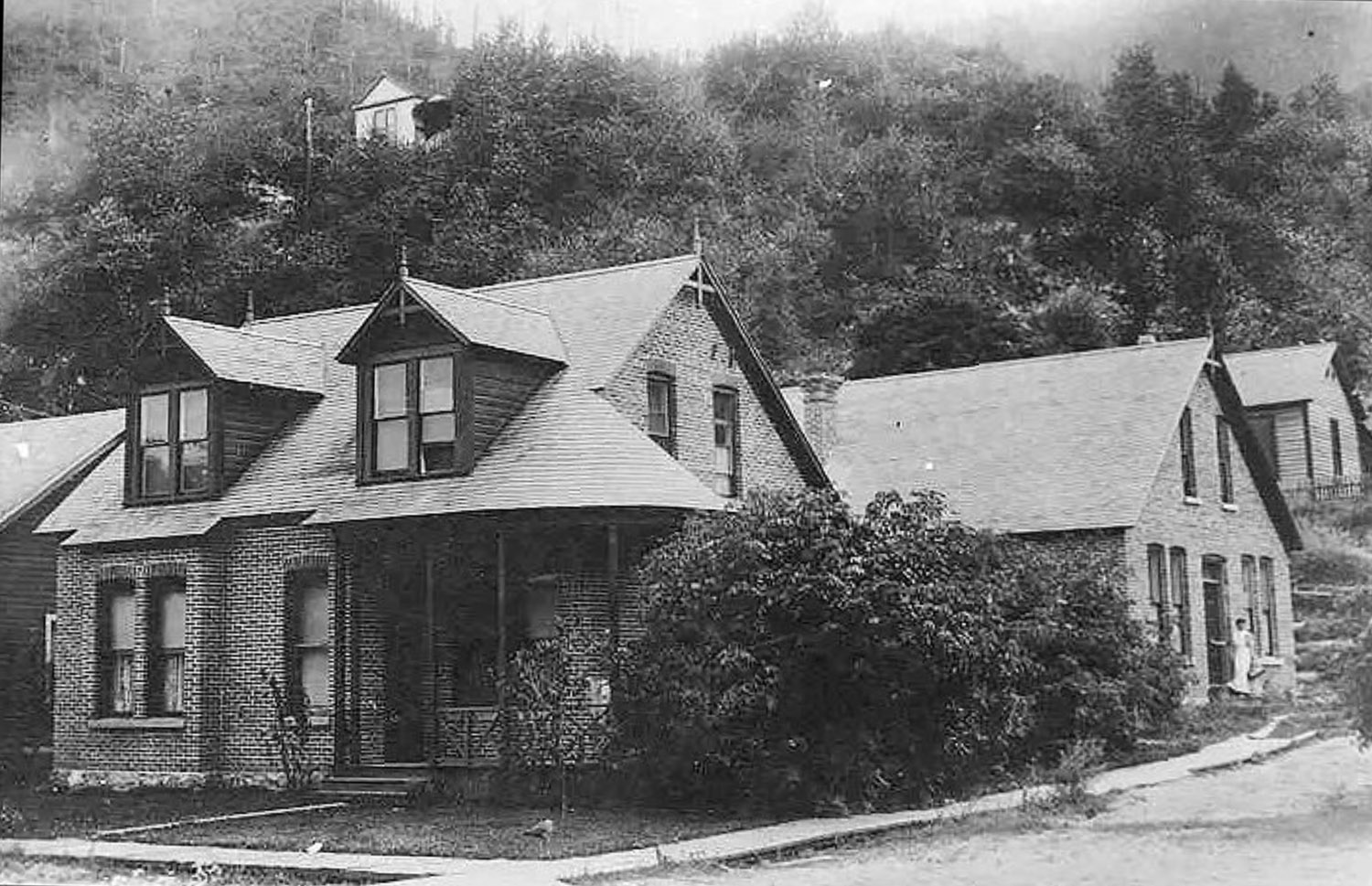
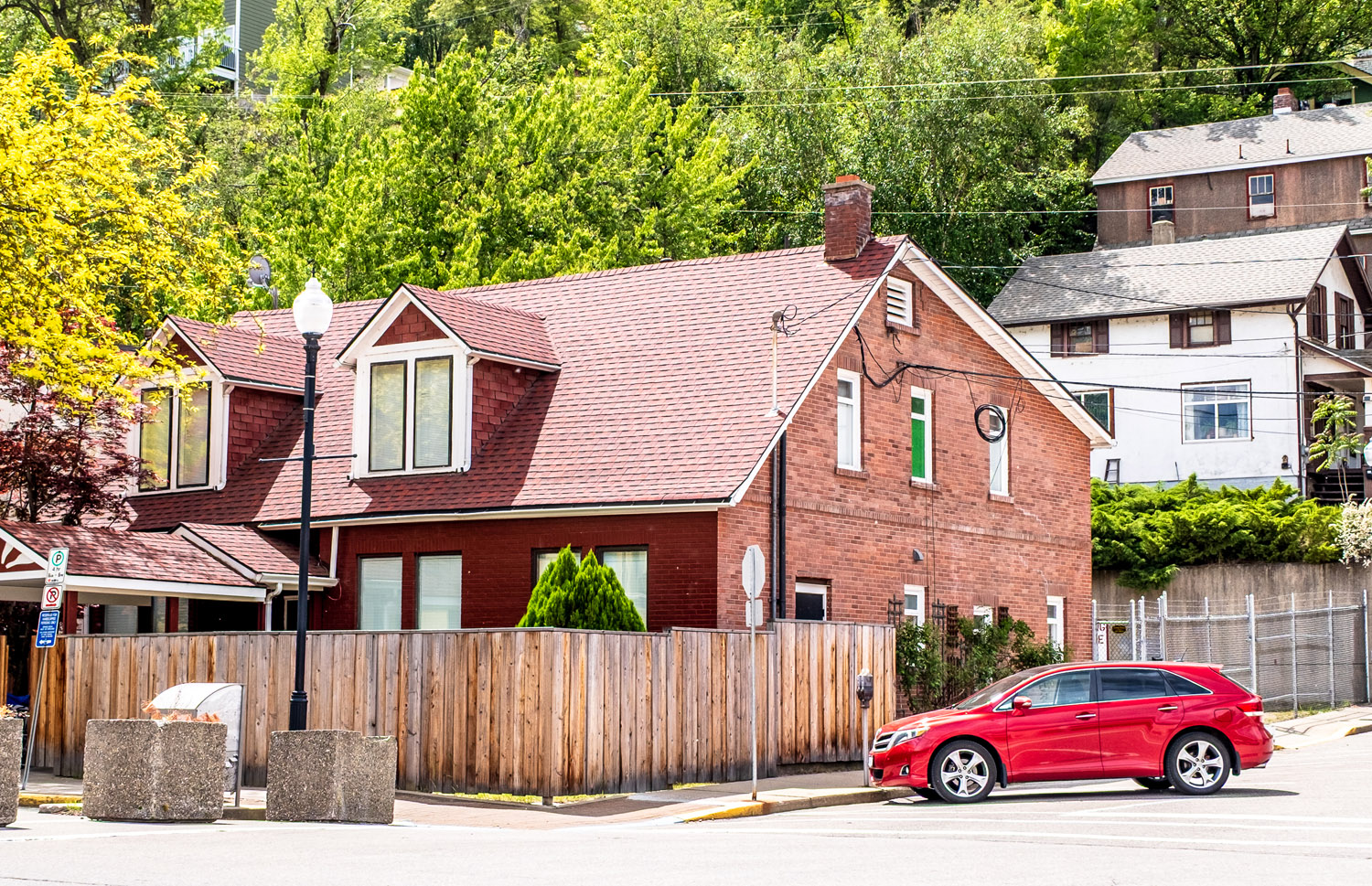
At first glance the brick house you see here looks like an upper class family's 19th century home. It was actually Trail's first hospital.
When we think of a hospital today we think of a sprawling campus filled with hundreds of highly trained and overworked professionals, one or two dozen specialist departments, and many, many extremely expensive machines.
Trail in the 1890s didn't have any of those things because they hadn't been invented yet. This hospital however, was well ahead of its time and an institution that all Trail could take pride and comfort in: the doctor lived in-house and had a great reputation; the eight beds were comfortable and the rooms airy; and it had state-of-the-art electric light bulbs above the operating table. What more could one ask for in a hospital in 1896?1
* * *
In 1903 Corsan sold this hospital to another doctor who had arrived in town: Dr. Frank Patterson. Patterson had bigger dreams to expand beyond this hospital, and in 1906 he sold the hospital (which was turned into a hotel) and soon set about building a new and better hospital kitty corner to it. At this time of writing the site is now an empty lot beside the Collander Restaurant.
By 1915 a number of new doctors had arrived in town, and they bought back the old hospital from the hotel, and turned it into a patient's clinic. It was the forerunner of today's C.S. Williams Clinic.
In 1925 a full fifty-bed hospital was built on Victoria Street, right across from the smelter. It was called the Tadanac Hospital. By 1954 the city had outgrown this hospital too, and a final hospital was built in East Trail, the Kootenay Boundary Regional Hospital.2
13. Bank of Montreal
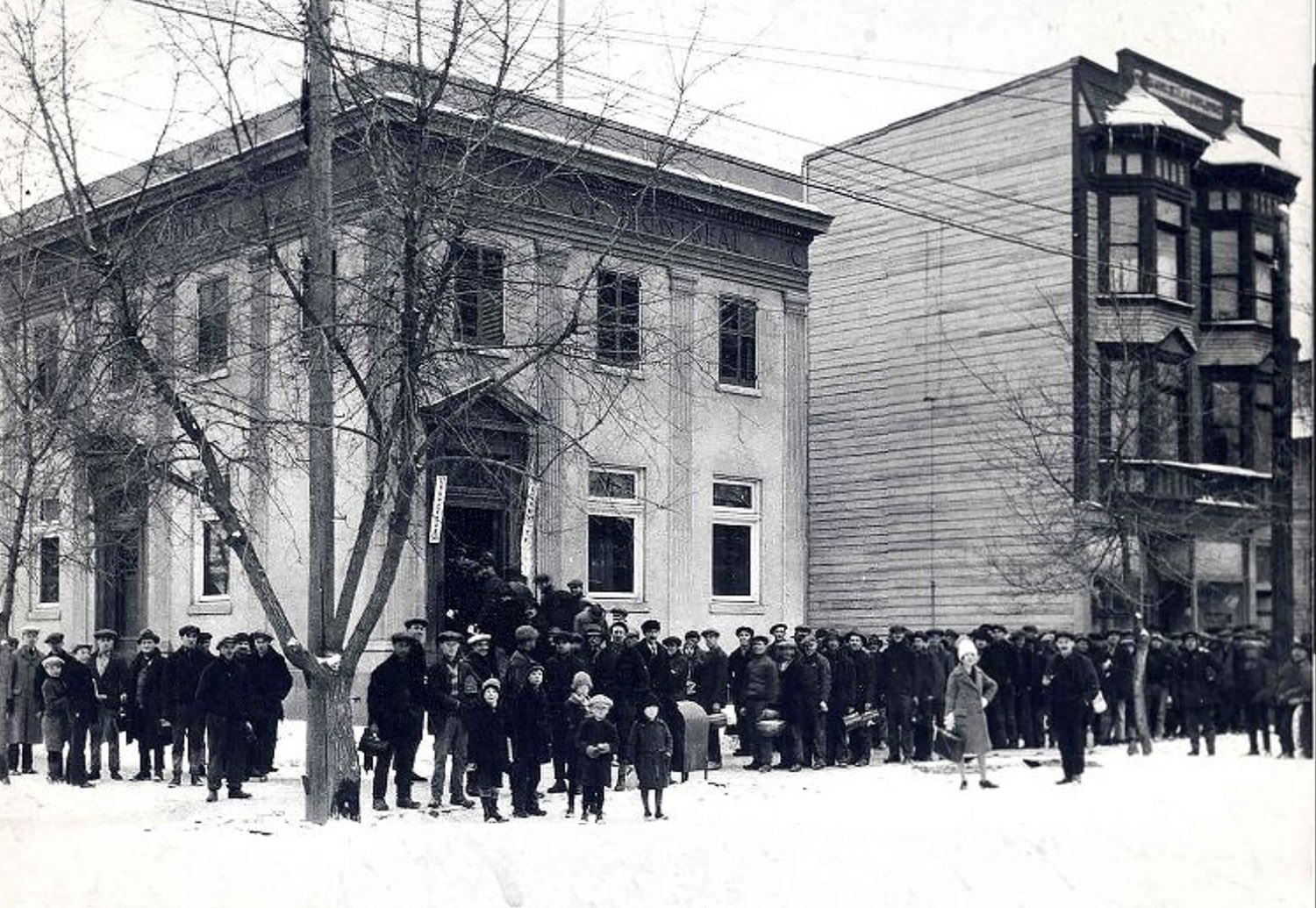
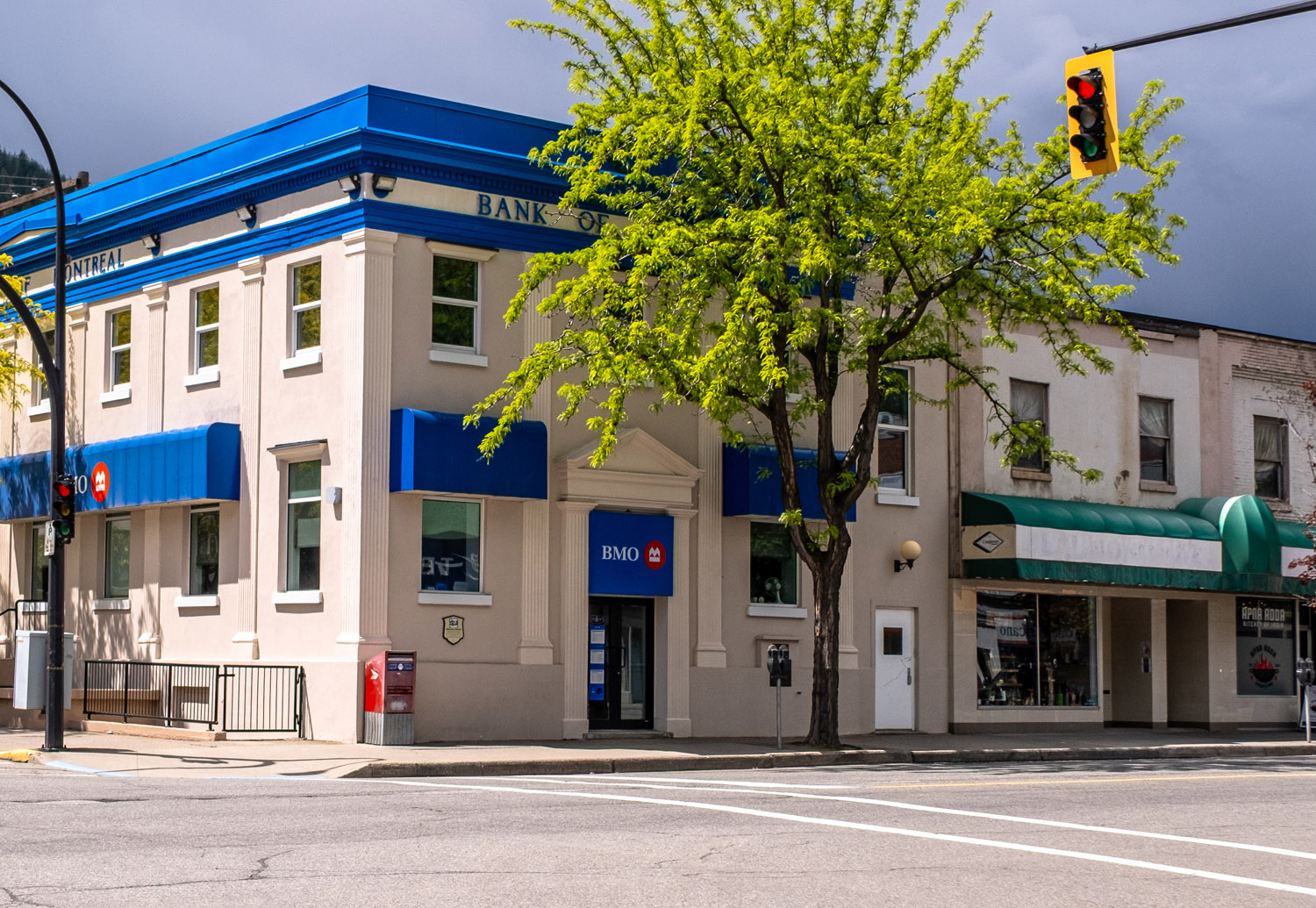
It's payday in Trail and dozens of smelter employees, still holding their lunch pails, have lined up outside the Bank of Montreal to cash their cheques. It's not surprising that everyone looks pretty happy--you probably know that feeling!
* * *
Banks always try to use architecture to convey a sense of stability and confidence. So it's not surprising that in this period most banks went with the Classical Revival style that was based on the architecture of ancient Greece and Rome: the buildings they remind you of have been around for thousands of years!
14. The Royal Theatre
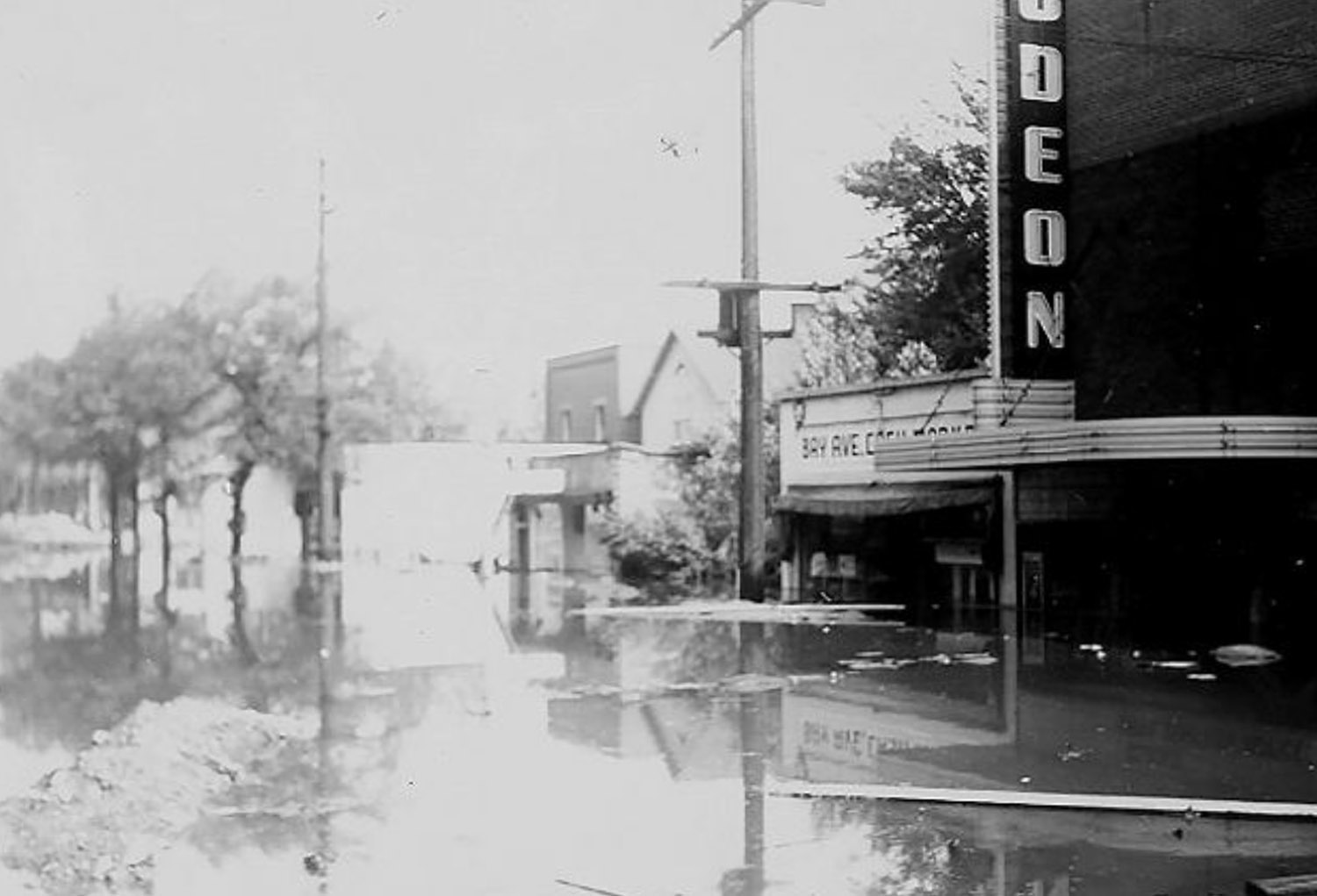
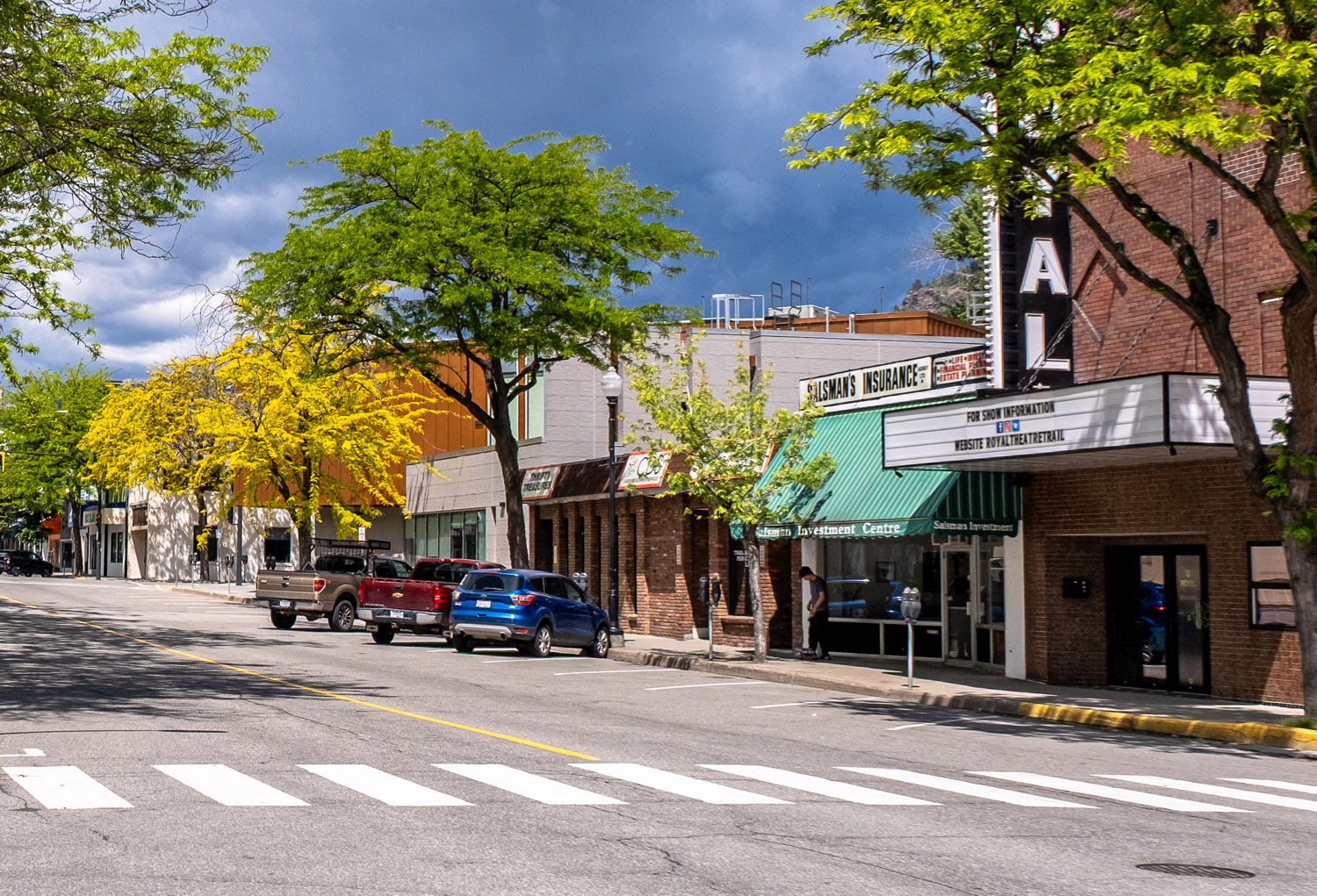
This photo shows the Odeon Theatre in 1948. As you can see it is mostly underwater: this photo was taken during the disastrous 1948 floods, when the waters of the Columbia River rose to the top of the ticket booth. Thankfully, the theatre survived, and continues today as the Royal--Trail's beloved independent community cinema.
* * *
The flood we see here, just three years after the fire, must have seemed a most disheartening run of bad luck. Nevertheless, after the flood they cleaned up and reopened again. During the flood of 1961 the waters rose just as high, but the theatre recovered and opened again. In 1977 the theatre changed ownership and was renamed the Royal.
The last change of ownership was in 2009, when Lisa Milne took the Royal over. "It is very much my community's cinema," she said in an interview with the CBC. "They have fully embraced everything that me and my team have done, what we're playing on the screen and the events we offer."
As the CBC reported: "Milne says small town cinemas like hers matter because they give people a place to gather. At the Royal, audiences don’t just watch a film; they run into neighbours, chat in the lobby and share an experience that reminds them they’re part of a community."1
Endnotes
4. McLean-Butorac Motors
1. Dave Glover, "One Moment Please: A History of Radio Broadcasting in Trail," BCradiohistory.com. https://bcradiohistory.com/Pictures7/one.pdf
5. Strand Theatre
1. Sheri Regnier, "Trail Blazers: The Very Grand Strand Theatre," *Trail Times*, July 24, 2022. https://trailtimes.ca/2022/07/24/trail-blazers-the-very-grand-strand-theatre/
2. Greg Nesteroff, "What still stands of the Strand," March 6, 2020, *Kutne Reader.* https://www.kutnereader.com/post/what-still-stands-of-the-strand
6. Knights of Pythias Hall
1. "Elenco Dei Soci Fondatori - Societa M.S. Cristoforo Colombo, Trail, B.C. Canada," *Discovering the Kootenays*, online. http://www.discoveringthekootenays.ca/iic.html
9. City Hall & Fire Brigade
1. Trail Centennial Committee, *Historical Portraits of Trail,* (Trail City Archives, 2001), 67-69.
12. Trail's First Hospital
1. Turnbull, Elsie. *Trail: A Smelter City,* (Sunfire Publications Ltd, 1985).
2. Trail Centennial Committee, *Historical Portraits of Trail,* (Trail City Archives, 2001), 75-76.
14. The Royal Theatre
1. Eric Veillette, "For small town cinemas across Canada, the show must go on," *CBC News*, Oct. 31, 2025. https://www.cbc.ca/arts/for-small-town-cinemas-across-canada-the-show-must-go-on-9.6961944
Bibliography
**Bibliography**
Trail Centennial Committee. *Historical Portraits of Trail.* Trail City Archives, 2001.
Trail Historical Society. *Guide to Historic Buildings and Places in Trail, BC. Second Edition.* 2021.
Turnbull, Elsie. *Trail: A Smelter City.* Sunfire Publications Ltd, 1985.
Veruzh, Ron. *Printer's Devils: How a feisty pioneer newspaper shaped the history of British Columbia, 1895, 1925,* Caitlin Press, 2023.
*Discovering the Kootenays*, "Elenco Dei Soci Fondatori - Societa M.S. Cristoforo Colombo, Trail, B.C. Canada." http://www.discoveringthekootenays.ca/iic.html
Glover, Dave. "One Moment Please: A History of Radio Broadcasting in Trail," BCradiohistory.com. https://bcradiohistory.com/Pictures7/one.pdf
Nesteroff, Greg. "What still stands of the Strand," March 6, 2020, *Kutne Reader.* https://www.kutnereader.com/post/what-still-stands-of-the-strand
Regnier, Sheri. "Trail Blazers: The Very Grand Strand Theatre," *Trail Times*, July 24, 2022. https://trailtimes.ca/2022/07/24/trail-blazers-the-very-grand-strand-theatre/
Veillette, Eric. "For small town cinemas across Canada, the show must go on," *CBC News*, Oct. 31, 2025. https://www.cbc.ca/arts/for-small-town-cinemas-across-canada-the-show-must-go-on-9.6961944